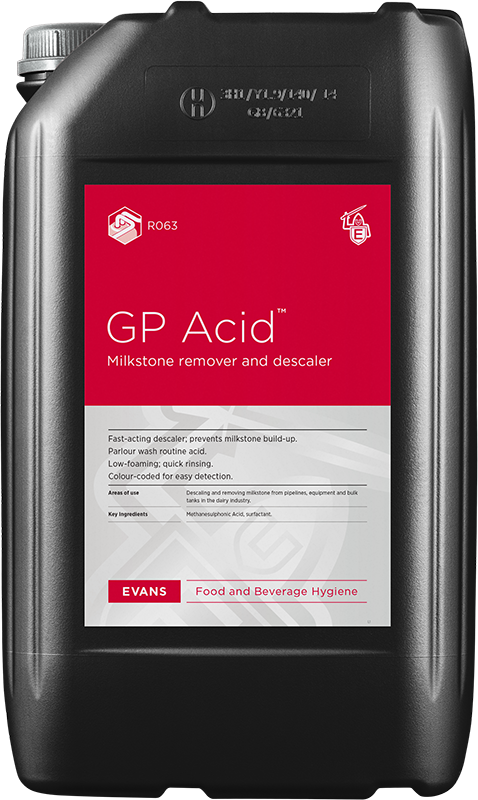
GP Acid 25L Milkstone Remover & Descaler
Evans Vanodine GP Acid is an acid-based milkstone remover and descaler for dairy pipelines, equipment and bulk milk tanks. It removes mineral deposits during a planned cleaning routine and can also be used for periodic milkstone prevention or a parlour wash.
The low-foaming formulation suits the manufacturer's circulation and immersion methods. GP Acid can be diluted with hot or cold water, with a different concentration specified for deposit removal, monthly prevention and routine parlour washing. Choosing the correct procedure avoids treating these separate tasks as interchangeable.
Thorough rinsing is central to its use. Milk residues are rinsed away before the removal treatment, and all traces of acid must be rinsed from the equipment afterwards. The equipment must be thoroughly rinsed with clean water before it is used again, helping prevent chemical residues from contaminating milk.
This listing supplies the 25-litre GP Acid pack, manufacturer code R063KEV. Compare it with other dairy cleaning products and plan the wider routine through our livestock hygiene range. Use the current label, product information and safety data sheet when preparing and handling the cleaning solution.
Key Features & Benefits
- Milkstone and scale removal: intended for dairy pipelines, equipment and bulk tanks.
- Low foam: supports circulation and immersion cleaning where specified by the manufacturer.
- Quick rinsing: designed to rinse away after treatment, with a thorough final rinse required.
- Hot or cold water: the manufacturer permits either for the stated dilutions.
- Separate application strengths: dedicated rates for removal, monthly prevention and parlour washing.
- 25L pack: the listed container supports a regular dairy equipment cleaning programme.
Directions for Use
Prepare safely and choose the procedure
Read the current label and safety sheet. GP Acid causes severe skin burns and eye damage: wear the specified protective gloves, clothing and eye/face protection, and do not breathe mist. Prepare the concentration appropriate to the task with hot or cold water. Keep the product separate from bleach, other oxidising materials and alkalis.
Remove existing milkstone
Use the manufacturer's 5% removal rate: 50ml of GP Acid per litre of water. Rinse milk off the equipment with clean cold water, then immerse the rinsed equipment in the prepared solution or circulate the solution for 10 minutes. Drain and rinse thoroughly with clean cold running water to remove all traces of acid.
Carry out monthly milkstone prevention
For the prevention routine, use 0.9%: 9ml per litre of hot or cold water. The manufacturer specifies monthly use, following the removal routine. Complete the treatment and final rinse before the equipment returns to service.
Complete a parlour wash and final rinse
For the parlour wash routine, dilute at 0.5–1.0%: 5–10ml per litre of hot or cold water, and circulate. After treatment, thoroughly rinse the equipment with clean water before it is used again. Follow the equipment instructions and current product label for the applicable wash cycle.
Product Specifications
| Specification |
Details |
| Manufacturer |
Evans Vanodine |
| Product |
GP Acid |
| Listed pack |
25 litres |
| Manufacturer 25L pack code |
R063KEV |
| Product type |
Acid-based milkstone remover and descaler |
| Intended equipment |
Dairy pipelines, equipment and bulk milk tanks |
| Water temperature |
Hot or cold water, as specified for the chosen application |
| Milkstone removal |
5%; 50ml per litre of water; immerse or circulate for 10 minutes |
| Monthly prevention |
0.9%; 9ml per litre of water; follow the removal routine |
| Parlour wash |
0.5–1.0%; 5–10ml per litre of water; circulate |
| Rinsing requirement |
Thoroughly rinse with clean water before equipment is used again |
FAQs
What is GP Acid used for?
GP Acid removes milkstone and mineral scale from dairy pipelines, equipment and bulk milk tanks. The manufacturer also provides separate instructions for monthly milkstone prevention and parlour washing. Select the procedure that matches the cleaning task.
What strength removes existing milkstone?
The removal instruction is 50ml per litre of hot or cold water, described by the manufacturer as 5%. Pre-rinse milk residues with clean cold water, immerse or circulate for 10 minutes, then drain and rinse thoroughly to remove all traces of acid.
How does the monthly prevention routine differ?
Monthly prevention uses the lower rate of 9ml per litre of water, described as 0.9%. The manufacturer says to follow the removal routine at this strength once a month. Thoroughly rinse the equipment before reuse.
What dilution is used for a parlour wash?
The specified parlour wash rate is 5–10ml per litre of hot or cold water, equivalent to the manufacturer's stated 0.5–1.0% range. Circulate the prepared solution and thoroughly rinse with clean water afterwards. Follow the current label and equipment guidance for the applicable wash cycle.
Why is the final rinse required?
The manufacturer requires a thorough clean-water rinse after treatment and before equipment is used again. This removes chemical residues that could otherwise contaminate milk. For the milkstone removal routine, it specifically calls for clean cold running water to remove all traces of acid.
What handling precautions and documents apply?
GP Acid is corrosive and causes severe skin burns and eye damage. Use the protective equipment specified in the safety sheet, keep it separate from bleach and alkalis, and store it tightly closed in its original container in a cool, well-ventilated place. The Related Documents section contains the current safety and product information sheets.