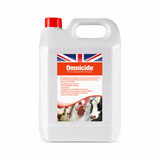
Evans Hypochlorite Dairy Disinfectant 25L
Evans Hypochlorite is a chlorine-based disinfectant for routine dairy hygiene, including milking plants, pipelines, dairy utensils and general cleaned surfaces. This 25 litre container supports a measured disinfection programme in which staff prepare equipment, apply the correct working solution and complete the required rinse before returning equipment to use.
The non-foaming formulation mixes easily with water and rinses freely, making it suitable for manual immersion and in-place circulation. Both dairy disinfection methods use 100ml in 40 litres of water, with at least two minutes of contact. The preparation and final draining steps differ between applications, so operators should follow the method that matches their equipment.
At the stated dairy disinfection dilution, a 25 litre container provides up to 10,000 litres of working solution. Accurate measurement helps staff repeat the procedure consistently across cleaning cycles. Include it in your dairy hygiene programme alongside separate cleaning and maintenance stages selected for the plant and the type of soiling.
Keep the product label and current safety data sheet available wherever the concentrate is handled. Evans Hypochlorite is corrosive, and contact with acids releases toxic gas. Staff should understand the required protective equipment, chemical separation and rinsing procedure before use; a recommendation for another cleaning product does not mean that the two products can be mixed.
Key Features & Benefits
- Chlorine-based disinfection: intended for routine treatment of prepared dairy equipment and general cleaned surfaces.
- Non-foaming formulation: suitable for both manual use and in-place disinfection programmes.
- Clear dairy dilution: 100ml in 40 litres of water for the manual and in-place disinfection methods below.
- Defined contact period: maintain contact for at least two minutes when disinfecting pre-cleaned dairy equipment.
- Easy mixing and rinsing: mixes readily with water and requires a clean, cold-water rinse after treatment.
- 25 litre supply: provides up to 10,000 litres of working solution at the stated dairy dilution.
Directions for Use
Prepare the equipment and handling area
Read the label and safety data sheet, then select the procedure for the task. The dairy disinfection methods below require pre-cleaned equipment. Wear protective gloves, protective clothing and eye or face protection, and avoid breathing mist. Measure the concentrate carefully and keep it separate from other products, particularly acids.
Disinfect dairy equipment manually
Add 100ml of Evans Hypochlorite to 40 litres of water. Immerse the pre-cleaned equipment and ensure that every surface contacts the working solution for at least two minutes. Rinse off thoroughly with clean, cold water, following the equipment's preparation and handling requirements.
Disinfect dairy plant in place
Add 100ml to 40 litres of water and circulate the solution through the pre-cleaned plant for at least two minutes. Rinse the plant with clean, cold water and allow it to drain completely. Use this procedure as the disinfection stage within the established cleaning programme for the installation.
Treat general cleaned surfaces and store correctly
For general disinfection, add 25ml to 10 litres of water, then wipe or scrub the cleaned surface with the solution. Rinse with clean, cold water. The product information sheet does not state a separate contact time for this application, so follow the current label and site procedure. Store the concentrate tightly closed in its original container in a cool, well-ventilated place, away from acids.
Product Specifications
| Manufacturer |
Evans Vanodine |
| Product |
Evans Hypochlorite |
| Manufacturer order code |
R064KEV |
| Pack size |
25 litres |
| Product type |
Chlorine-based disinfectant |
| Appearance |
Pale yellow to colourless clear liquid |
| Odour |
Hypochlorite |
| pH, undiluted |
12.4 |
| Dairy disinfection dilution |
100ml in 40 litres of water |
| Dairy disinfection contact time |
At least two minutes, followed by a clean, cold-water rinse |
| General disinfection dilution |
25ml in 10 litres of water |
| Manufacturer-stated shelf life |
1 year |
FAQs
Is Evans Hypochlorite ready to use?
No. It is a concentrate that must be measured and diluted for the selected application. For manual or in-place disinfection of pre-cleaned dairy equipment, the manufacturer specifies 100ml in 40 litres of water. Keep the labelled container and measuring equipment available so that the correct quantity can be used consistently.
Does dairy equipment need cleaning before disinfection?
Yes. The manual and in-place disinfection directions apply to pre-cleaned equipment. Complete the appropriate cleaning stage first, then use the disinfectant at its stated dilution and contact time. Disinfection should form part of a planned equipment-care procedure, with cleaning, treatment and rinsing each completed as directed.
Can it be circulated through milking plant?
Yes. Its non-foaming formulation is suitable for in-place disinfection. Circulate the stated working solution through the pre-cleaned plant for at least two minutes, then rinse with clean, cold water and allow it to drain completely. Follow the equipment supplier's requirements when setting up the circulation procedure.
How much working solution does the 25 litre container provide?
The manufacturer states that a 25 litre container makes up to 10,000 litres of working solution at the dairy disinfection dilution of 100ml in 40 litres of water. This is a dilution-based yield, rather than a fixed number of cleaning cycles: the amount needed for each cycle depends on the equipment and application.
Can it be mixed with other cleaning chemicals?
The current safety data sheet says not to mix it with other products, especially acidic products; contact with acids releases toxic gas. Do not improvise detergent mixtures from older or general guidance. Any combined sanitising procedure needs current product-specific instructions from Evans. Select other cleaning chemicals for their own separate tasks and follow the required separation and rinsing steps.
What handling precautions are required?
The concentrate causes severe skin burns and eye damage and is very toxic to aquatic life. Wear the protective gloves, clothing and eye or face protection specified in the safety data sheet, and do not breathe mist. Keep it in its original, tightly closed container away from acids, and follow the label and safety data sheet for incident response and disposal.