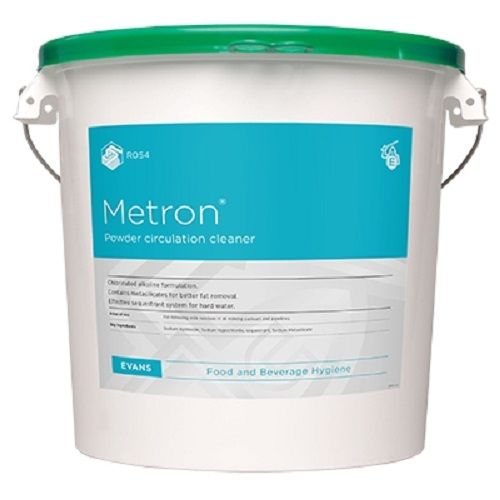
Metron 20kg Dairy Circulation Cleaner
Evans Metron is a chlorinated alkaline powder for circulation cleaning in dairy milking plant and pipelines. Its sodium hydroxide and sodium metasilicate formulation removes milk residues, with metasilicates supporting fat removal. The product is also suitable for bulk milk tank cleaning through appropriate automatic or hand-operated spray equipment.
The powder dissolves easily in water and uses a sequestrant system to support cleaning across water hardness levels. Evans describes Metron as defatting and protecting rubbers and helping to prevent milkstone build-up in the parlour. Free-rinsing performance supports the final wash stages, while regular equipment inspection remains part of the maintenance routine.
The standard in-place cleaning dose is 150g in 40 litres of hot water at 77–82°C. Where total water hardness exceeds 350ppm, the manufacturer specifies an additional measured dose for each further 60ppm. This product-specific guidance helps staff choose a consistent preparation method based on the water supply and the equipment being cleaned.
This listing supplies a 20kg bucket, manufacturer code R054JEV, for repeated use within a planned dairy hygiene programme. Follow the full wash sequence, including the return-line temperature, ten-minute circulation stage and thorough final rinse. Keep the current label and safety data sheet available wherever the corrosive powder is measured or handled.
Key Features & Benefits
- Chlorinated alkaline powder: formulated for dairy circulation cleaning and compatible bulk-tank cleaning systems.
- Milk-residue removal: sodium hydroxide and metasilicate cleaning ingredients support the removal of dairy soils and fats.
- Water-hardness support: an effective sequestrant system, with specific additional dosing guidance for particularly hard water.
- Easy dissolution: powder that dissolves readily when mixed with water as directed.
- Free-rinsing action: supports removal of the used solution during the required clean-water rinse.
- Equipment care: described by Evans as defatting and protecting rubbers and helping prevent milkstone build-up.
- 20kg supply: a measured powder format for regular use within a documented cleaning routine.
Directions for Use
Prepare the plant and protect the operator
Rinse the plant thoroughly with clean water and run to waste. Read the product label, safety data sheet and equipment instructions before making the solution. Wear protective gloves, clothing and eye or face protection, and do not breathe dust. Keep Metron separate from other chemicals, particularly acids, which release toxic gas on contact.
Measure and mix the working solution
For each 40 litres of hot water at 77–82°C, add 150g Metron and mix. Carefully add the powder to the water; never add water directly onto the powder, as this can cause a vigorous reaction or boiling. If total hardness exceeds 350ppm, the manufacturer specifies an extra 25g per 40 litres for each additional 60ppm of hardness. Check the water measurement and current instructions before applying this adjustment.
Circulate, discharge and rinse thoroughly
Draw the solution into the plant and allow some to run to waste until the return line discharges hot solution at a minimum of 50°C. Set the return line for circulation and circulate for ten minutes, then run the solution to waste. Rinse thoroughly with clean water and allow the plant to drain. Thorough clean-water rinsing after treatment and before reuse is required to prevent chemical residues contaminating milk.
Follow tank instructions and inspect the plant
For bulk milk tanks, use Metron with automatic or hand-operated spray equipment according to the equipment manufacturer's instructions. Follow the manufacturer's instructions for ice-bank tanks too. Each month, check the plant condition, replace rubber parts as required and inspect milk tubes and the mouths of cup liners for deposits. Any separate milkstone-removal treatment must follow its own procedure without mixing chemicals.
Product Specifications
| Manufacturer |
Evans Vanodine |
| Product |
Metron |
| Manufacturer order code |
R054JEV |
| Pack size |
20kg bucket |
| Product type |
Chlorinated alkaline powder circulation cleaner |
| Appearance and odour |
White powder with a faint chlorine odour |
| Standard in-place dose |
150g in 40 litres of water |
| Preparation temperature |
77–82°C for the specified in-place method |
| Return-line temperature and circulation |
At least 50°C before ten-minute circulation |
| Hard-water adjustment |
Above 350ppm total hardness, add 25g per 40 litres for each extra 60ppm |
| pH at 150g per 40 litres |
12.0 |
| Manufacturer-stated shelf life |
2 years |
FAQs
Is Metron a liquid or a powder?
Metron is supplied as a concentrated powder in a 20kg bucket. It must be measured and dissolved for the intended cleaning procedure. For standard in-place cleaning, add 150g to each 40 litres of water at 77–82°C, then follow the specified circulation and rinsing stages.
Can Metron be used in hard water?
Yes. Its sequestrant system supports cleaning across water hardness levels. For total hardness above 350ppm, Evans specifies an extra 25g per 40 litres for each further 60ppm. Base any adjustment on the measured water hardness and current product instructions, and seek product-specific advice if the reading or required dose is unclear.
What is the required circulation time?
The in-place method uses ten minutes of circulation after the return line is discharging solution at a minimum of 50°C. Prepare the solution with water at 77–82°C and allow some to run to waste before recirculating. Afterwards, discharge the used solution, rinse thoroughly with clean water and allow the plant to drain.
Can it clean bulk milk tanks?
Yes. Metron may be used with appropriate automatic or hand-operated tank spray equipment, following the equipment manufacturer's programme. Ice-bank tanks also require their manufacturer's instructions. The published in-place pipeline dose and cycle should not be assumed to replace the specified settings for every tank-cleaning system.
Does Metron replace routine equipment inspection?
No. The product sheet calls for monthly checks of the plant condition, replacement of rubber parts when required and inspection for deposits in milk tubes and cup-liner mouths. Cleaning performance and physical condition both matter. Keep any additional maintenance or milkstone-removal treatments within their own separate, documented procedures.
How should Metron be handled and stored?
Keep the powder dry, cool and protected from sunlight in its tightly closed original container. Store away from acids and do not mix it with other cleaning chemicals. Metron causes severe skin burns and eye damage, may irritate the respiratory system and is toxic to aquatic life with lasting effects. Follow the safety data sheet for protection, handling and disposal.