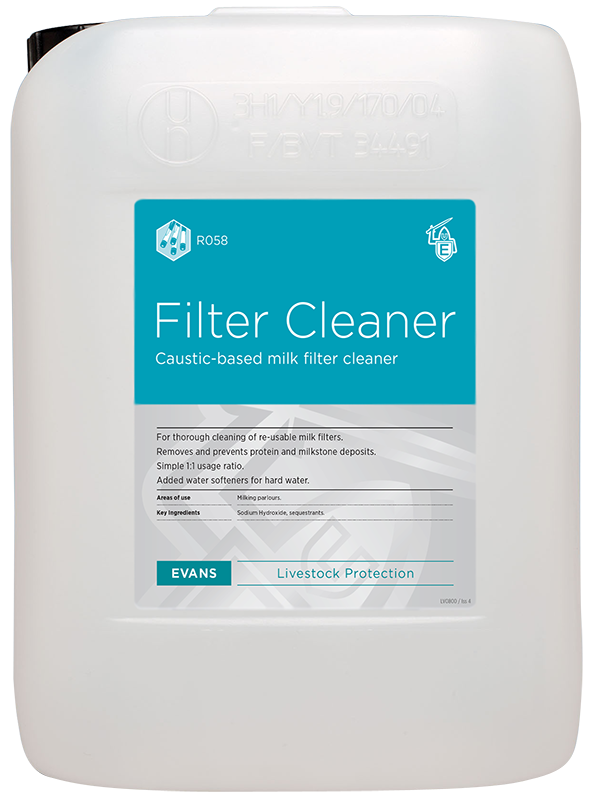
Evans Filter Cleaner 10L for Milk Filters
Evans Filter Cleaner is a caustic-based liquid developed for cleaning reusable in-line milk filters. This listing supplies a 10 litre container, manufacturer code R058IEV. Its intended role is to help prevent and remove protein and milkstone deposits from reusable filter elements as part of the dairy's regular equipment-cleaning programme.
The concentrate is mixed with an equal volume of cold water for a 1:1 working solution. Added water softeners support use in hard-water areas. The manufacturer's procedure combines a thorough initial rinse with immersion between milkings, followed by another thorough rinse under cold running water before the filter elements return to service.
This is a specialist filter-cleaning task with its own preparation and soaking instructions. For wider farm cleaning, a separate detergent such as Evans Shift has different labelled applications. Check the filter equipment manufacturer's instructions and keep the cleaning method appropriate to the reusable elements being treated.
Where a hygiene programme also requires disinfection, select the product for that separate stage and its permitted use. Evans Hypochlorite has its own dairy-disinfection directions. Never mix cleaning chemicals together, and keep the Filter Cleaner label and safety data sheet available when preparing, using and disposing of its solution.
Key Features & Benefits
- Caustic-based cleaner formulated for reusable in-line milk filters.
- Helps prevent and remove protein and milkstone deposits.
- Added water softeners support cleaning in hard-water areas.
- Measured 1:1 dilution using equal volumes of product and cold water.
- Designed for immersion of rinsed filter elements between milkings.
- Manufacturer directions include thorough cold-water rinsing before reuse.
- 10 litre container for professional dairy equipment cleaning.
Directions for Use
Prepare the working solution carefully
Read the current label and safety data sheet. Wear the specified protective gloves, clothing and eye or face protection. Slowly mix equal volumes of Filter Cleaner and cold water while stirring continuously, following the manufacturer's handling instructions. The concentrate causes severe skin burns and eye damage; avoid splashes and do not breathe mist.
Remove and rinse the filter elements
Immediately after milking finishes, remove the reusable elements from the filter body in accordance with the equipment instructions. Thoroughly rinse off excessive soiling with cold water before placing the elements in the cleaning solution. The initial rinse is part of the specified process and should not be skipped.
Soak, rinse and return to service
Immerse the rinsed filter elements in the prepared 1:1 solution and leave them until just before the next milking. When required, remove them from the solution and rinse thoroughly under cold running water before use. Check the equipment manufacturer's requirements when reassembling and returning the filter to service.
Renew the solution and store the concentrate
The manufacturer specifies renewing the cleaning solution every month. Follow the current label and site procedure for its management and disposal. Keep the concentrate in its original, tightly closed container in a cool, ventilated place, away from acids and oxidising materials. Keep it out of children's reach and follow the safety data sheet if exposure or a spill occurs.
Product Specifications
| Specification |
Details |
| Manufacturer |
Evans Vanodine |
| Product |
Filter Cleaner |
| Manufacturer pack code |
R058IEV |
| Pack size |
10 litres |
| Product type |
Concentrated caustic-based alkaline cleaner |
| Intended equipment |
Reusable in-line milk-filter elements |
| Target deposits |
Protein and milkstone |
| Working dilution |
1:1; equal volumes of product and cold water, mixed slowly with continuous stirring |
| Immersion period |
After milking until just before the next milking, following the manufacturer procedure |
| Final rinse |
Thoroughly under cold running water before reuse |
| Solution renewal |
Every month, as stated on the manufacturer product sheet |
| Appearance and odour |
Colourless to pale pink clear liquid with a characteristic odour |
| Undiluted pH |
13.6, as stated on the product information sheet |
| Manufacturer shelf life |
3 years, subject to the specified storage conditions |
| Principal hazard |
Causes severe skin burns and eye damage; consult the current safety data sheet |
FAQs
What type of filters is this cleaner intended for?
The manufacturer specifies reusable in-line milk filters. It should not be assumed suitable for disposable filters, unrelated cartridges or every filter material. Check the equipment instructions before use and follow the stated removal, soaking and rinsing procedure.
What does the 1:1 dilution mean?
It means equal volumes of Filter Cleaner and cold water. The manufacturer instructs users to mix slowly while stirring continuously. Wear the specified protection and follow the current label and safety data sheet when preparing the caustic solution.
Should filter elements be rinsed before soaking?
Yes. Remove the elements immediately after milking and thoroughly rinse off excess soiling with cold water. Only then immerse them in the prepared solution. A second thorough rinse under cold running water is required before reuse.
How long should the filter elements remain immersed?
The manufacturer directs users to leave the rinsed elements in the cleaning solution until just before the next milking. It does not give a universal number of minutes for every dairy schedule. Complete the thorough final rinse before returning the elements to service.
Can the prepared solution be kept for repeated use?
The product sheet specifies renewal every month. Manage the solution according to the current label, the equipment requirements and the site's cleaning procedure. Keep track of when it was prepared and follow the appropriate disposal instructions when replacing it.
Is Filter Cleaner a disinfectant?
The manufacturer identifies it as an alkaline cleaner for removing deposits from reusable milk filters. The supplied product sheet does not state disinfectant EN efficacy claims. Where disinfection is required, use a suitable product and a separate procedure specified for that task.