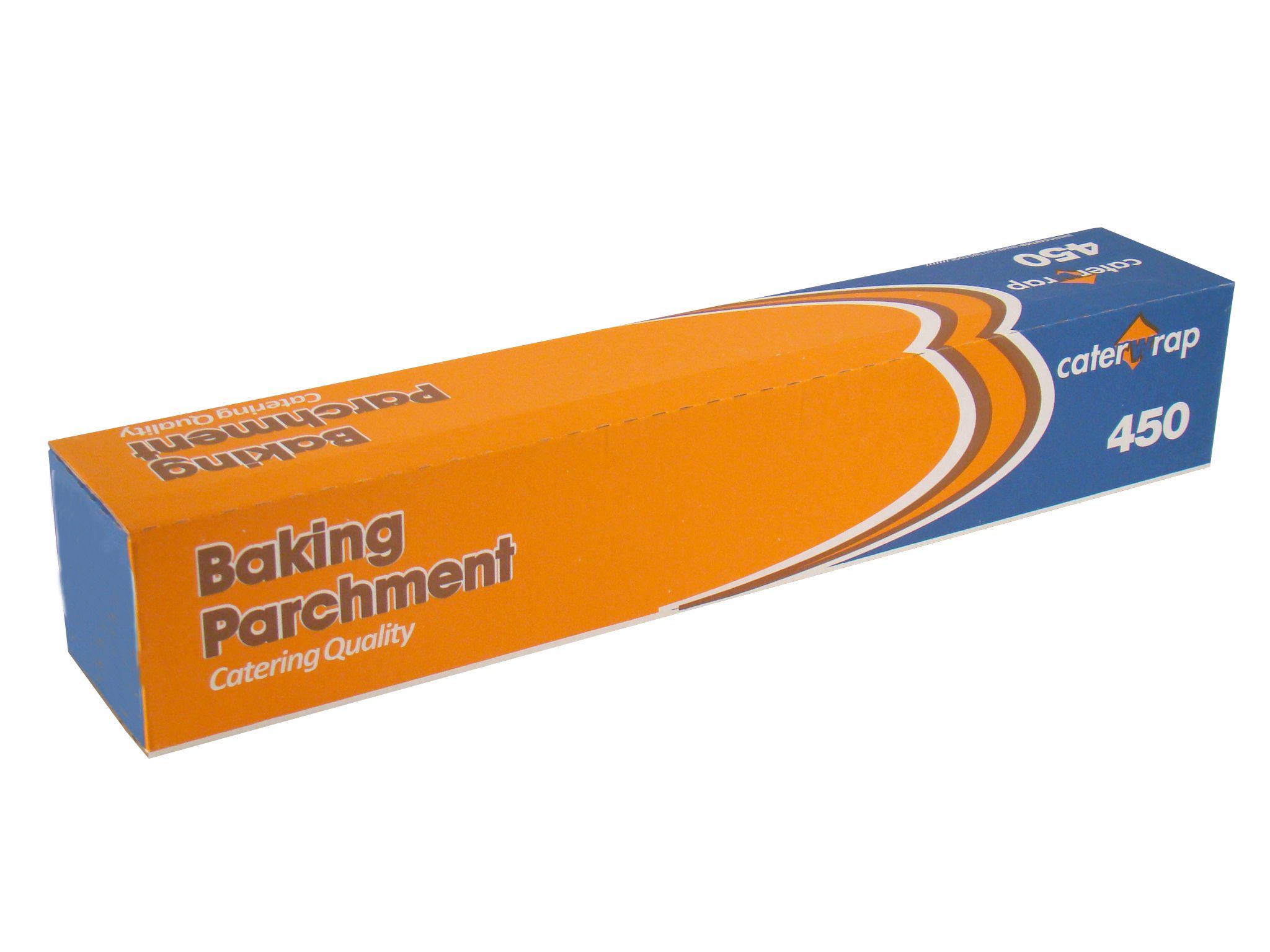
Baking Parchment 450mm Cutter Box
This non-stick baking parchment provides a paper lining for cake tins, baking trays and sheets. Its 450mm width offers useful coverage for commercial bakeware, while the flexible roll format allows lining pieces to be prepared for different shapes and sizes. It is a practical consumable for kitchens making a varied range of baked products.
Double-sided non-stick surface
The parchment is siliconised on both sides to provide a non-stick finish on either face. This helps baked food release from the lining and removes the need to grease the parchment itself. The coating makes it useful for preparing trays and tins for cakes, biscuits and pastry work.
A separate paper lining also provides a clear preparation surface within the baking equipment. It can follow the shape of a tin or cover a flat baking sheet, giving teams flexibility across everyday recipes and batch sizes.
Cutter-box dispensing for commercial baking
The cutter box holds the parchment together and provides a convenient point for dispensing paper at the preparation bench. The roll format allows a larger piece to be prepared for a tray or smaller pieces to be trimmed for individual tins, without relying on a fixed pre-cut sheet size.
Alongside parchment for baking and tray lining, the existing 45cm catering aluminium foil and 45cm catering cling film listings provide other kitchen wrapping materials for their stated applications.
Key Features & Benefits
- Double-sided silicone coating: provides a non-stick lining surface on either face.
- Easy food release: helps separate baked products from the parchment.
- No parchment greasing required: the silicone coating supplies the non-stick finish.
- 450mm width: offers useful coverage for commercial tins and trays.
- Flexible roll format: allows lining pieces to suit different equipment sizes.
- Cutter-box dispensing: keeps the parchment organised at the preparation bench.
Technical Specifications
| Product |
Non-stick baking parchment |
| SKU |
332 |
| Listed product reference |
45050 |
| Width |
450mm; nominal 18-inch format |
| Roll length |
50m |
| Supply format |
Roll in a cutter box |
| Surface |
Siliconised on both sides |
| Finish |
Non-stick |
| Typical applications |
Lining cake tins, baking trays and baking sheets |
Ideal Applications
- Bakeries preparing cakes, biscuits and pastries.
- Cafés and restaurants with regular baking requirements.
- Catering kitchens working with different tin and tray sizes.
- Lining cake tins, baking trays and baking sheets.
- Routine batch preparation and smaller baking tasks.
Directions for Use
- Place the cutter box on a clean, dry preparation surface. Dispense the required parchment and use the cutting edge carefully, keeping fingers clear.
- Trim the paper to fit the tin or tray. Avoid loose overhanging edges that could contact a heat source. The parchment does not need greasing.
- Add the food or mixture and follow the supplied packaging limits for cooking temperature, duration and appliance use. Keep paper away from direct flames and exposed heating elements.
- Handle hot food and equipment safely after cooking. Dispose of used parchment according to the workplace waste arrangements, taking account of food and grease contamination.
- Close the box between uses and keep the remaining parchment clean, dry and protected from splashes.
Frequently Asked Questions
What makes this parchment non-stick?
It is siliconised on both sides. This coating helps baked food release from the paper lining.
What width is the parchment?
It is 450mm wide, described as the nominal 18-inch format. This provides useful coverage for a range of commercial tins, trays and baking sheets.
Does the parchment need greasing?
No. The silicone coating provides the non-stick surface, so the parchment itself does not need greasing.
Is a cutter box included?
Yes. The parchment is supplied in a cutter box that holds the roll and provides a dispensing and cutting point during preparation.
Is it supplied as fixed-size sheets?
No. It is a roll, allowing larger lining pieces for trays and smaller pieces for individual tins to be prepared as needed.
Which side should face the food?
Both sides have the silicone coating, so either face provides the non-stick lining surface.