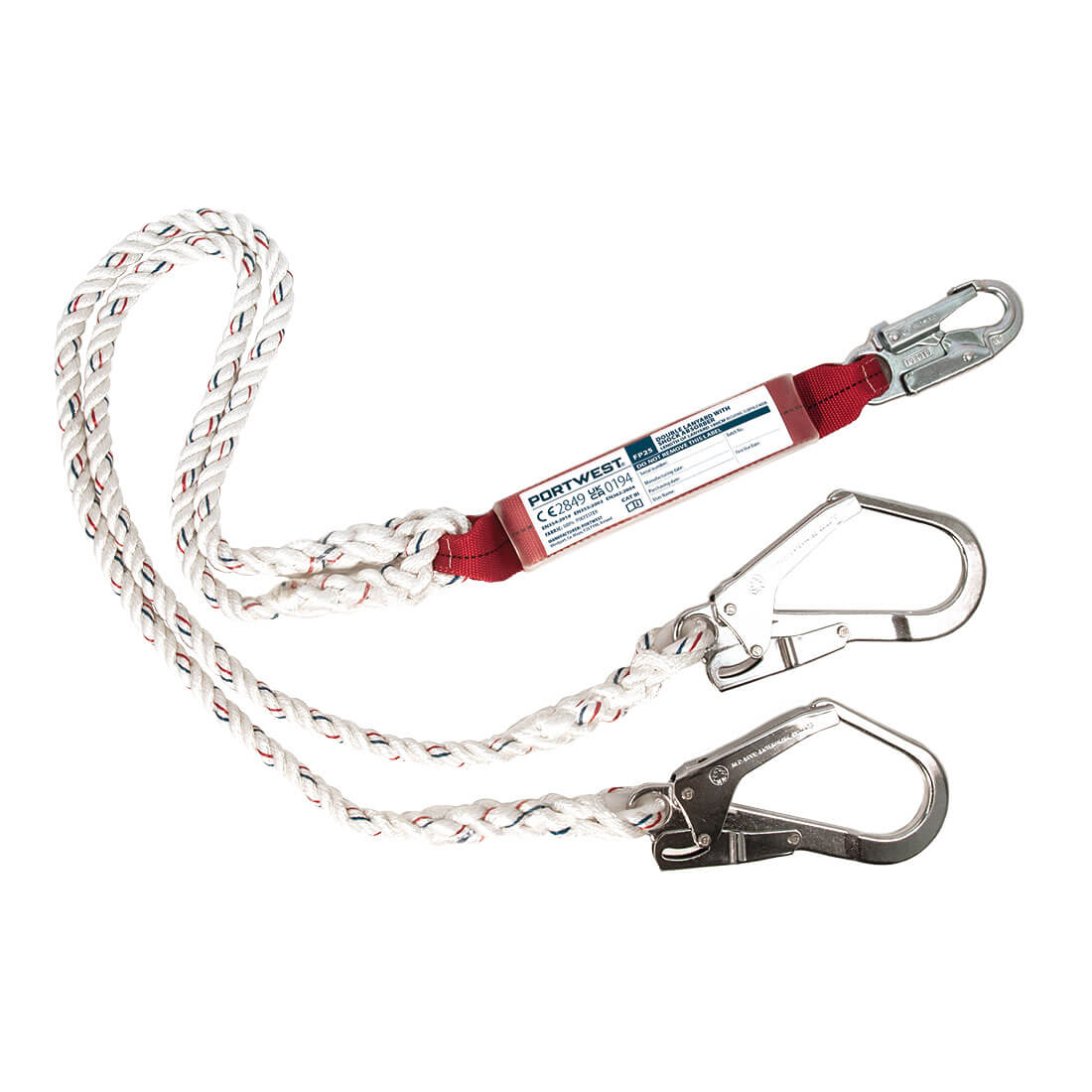
Portwest FP25 Double 1.8m Shock-Absorbing Lanyard
The Portwest FP25 is a twin rope lanyard with a tear-open energy absorber for a compatible fall-arrest system. It combines two 1.2m rope legs with two scaffold hooks and a snap hook. The complete assembly measures 1.8m including the connectors, which is a different measurement from the length of either rope leg.
The double-leg arrangement can support a planned connection sequence between suitable anchorage points. Its effectiveness depends on the selected system, the user’s training and the permitted method of using each leg. A twin lanyard does not make every transition safe, so the work plan must address both the connection sequence and the treatment of any unused leg.
Portwest lists a 52mm scaffold-hook opening, a maximum rated load of 100kg and the standards EN 354:2010, EN 355:2002 and EN 362:2004. Polyester rope is combined with aluminium and heat-treated alloy steel components. These specifications support selection, but they do not replace the compatibility and clearance checks needed for the actual work area.
Compare FP25 with the other assemblies in our fall-prevention equipment range when specifying equipment for the task. Confirm the harness, anchorage locations and rescue arrangements with a competent person before use. Keep the supplied instructions and inspection history available, and remove the assembly from service after a fall or suspected damage.
Key Features & Benefits
- Twin rope legs: two 1.2m ropes for an approved double-leg connection arrangement.
- 1.8m total assembly: the manufacturer’s stated length includes the connectors.
- Tear-open energy absorber: incorporated into the complete lanyard assembly.
- Three supplied connectors: two scaffold hooks and one snap hook.
- 52mm scaffold-hook opening: a stated dimension for the compatibility assessment.
- 100kg maximum rated load: check against the complete user load and other system limits.
- Manufacturer-listed standards: EN 354:2010, EN 355:2002 and EN 362:2004.
Directions for Use
1. Plan the twin-leg arrangement
A competent person must select the complete fall-arrest system and establish suitable anchorage points, required clearance and rescue arrangements. Confirm that the twin-leg configuration is appropriate for the task and that the user is trained in its approved connection sequence. Do not infer suitability from the presence of two hooks.
2. Inspect every part before use
Inspect both rope legs, terminations, energy absorber, protective cover, hooks and labels as directed by Portwest. Check connector operation and the equipment’s examination history. Remove the assembly from service if any part is damaged, the absorber has activated or its condition is uncertain.
3. Follow the specified connection sequence
Connect only to compatible points using the manufacturer’s instructions and the assessed work plan. Confirm that hooks close and secure correctly without unsuitable loading. Follow the stated requirements for both legs, including any unused leg, and do not improvise attachment or stowage arrangements.
4. Care for and retire the assembly
Follow the supplied instructions for cleaning, drying, storage and periodic examination. Maintain identification and inspection records throughout use. After a fall, absorber activation or suspected damage, quarantine the complete assembly and follow the manufacturer’s retirement requirements; do not repair or reset it yourself.
Product Specifications
| Specification |
Details |
| Brand and model |
Portwest FP25 |
| Product type |
Twin rope lanyard with shock absorber |
| Total assembly length |
1.8m including connectors |
| Rope legs |
Two 1.2m ropes |
| Materials |
Polyester rope, aluminium, heat-treated alloy steel and PVC |
| Energy absorber |
Tear-open type |
| Connectors |
Two scaffold hooks and one snap hook |
| Scaffold-hook opening |
52mm |
| Maximum rated load |
100kg |
| Listed standards |
EN 354:2010; EN 355:2002; EN 362:2004 |
FAQs
Are both rope legs 1.8m long?
No. Portwest specifies two 1.2m ropes within an assembly that measures 1.8m including its connectors. The overall assembly length and individual rope-leg length should be kept distinct when checking the product against the intended system.
Does a double lanyard guarantee continuous protection?
No. A twin-leg design can support a planned connection sequence, but protection depends on correct use within a suitable system. Anchorage selection, transition method, clearance and the treatment of the unused leg must follow the supplied instructions and work plan.
Which connectors does FP25 include?
The assembly includes two scaffold hooks and one snap hook. Portwest lists a 52mm scaffold-hook opening. A competent person must still confirm that the connectors are compatible with the selected attachment points and will be loaded correctly.
What load and clearance limits apply?
The manufacturer’s maximum rated load is 100kg. Required fall clearance must be established separately for the complete arrangement using the supplied instructions; the 1.8m product length does not state the clearance needed below the wearer.
Can it be returned to use after the absorber activates?
Remove the whole assembly from service after absorber activation or a fall and follow Portwest’s retirement requirements. Do not assume that an undamaged-looking rope leg or hook makes the lanyard reusable, and do not attempt to reset the absorber.
What should be confirmed before buying?
Check the twin-leg configuration, complete length, connector interfaces and rated load against the assessed task. For clarification of the listed specification, contact Astral Hygiene. A competent person must approve the complete system and the intended connection procedure.