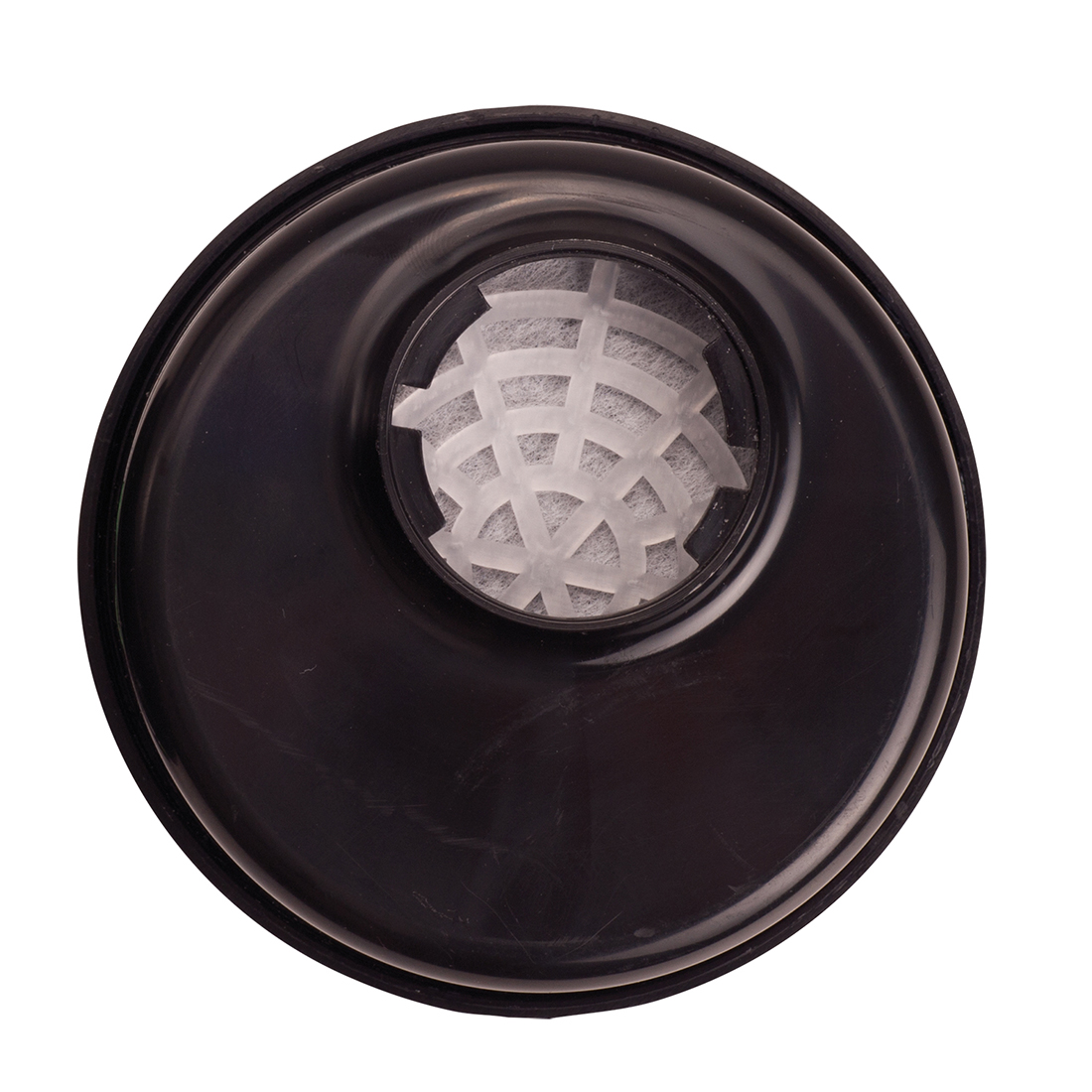
Portwest P941 P3 R Bayonet Particle Filters – Pack of 6
Portwest P941 filters provide the particle-filtration component of a compatible reusable respirator. Their P3 R classification is for airborne particles, including dusts, fumes and mists, within the limitations of the selected equipment. Assess the contaminant and exposure level before deciding whether a particular mask and filter assembly is suitable.
This pack contains six individual cartridges, giving three matched pairs for twin-filter masks. Two filters are fitted for use, with one on each side of the facepiece. The pack contains replacement filters only; the mask is purchased separately.
The Portwest bayonet connection is compatible with the P500 full-face mask and P420, P430, P421 and P431 half masks. Options in this range include the P500 Vienna full-face mask and P430 Geneva half mask. Check the exact model before ordering: these cartridges do not fit the threaded P410 Auckland system.
Particle filtration is different from gas or vapour filtration. P941 filters are not a substitute for gas or combination cartridges when those hazards are present. The complete respirator must also fit the wearer correctly, with face-fit testing, training and routine seal checks forming part of its use.
Key Features & Benefits
- P3 R particle-filter classification to EN 143.
- Portwest bayonet fitting for specified compatible facepieces.
- Twin-filter use, with matching cartridges on both sides.
- Pack of six individual filters, equivalent to three pairs.
- Replacement cartridges for an assessed reusable respirator system.
Directions for Use
1. Confirm the mask and assessed hazard
Check that the facepiece model appears in the compatibility list and that particle filtration is appropriate for the work. Read the instructions supplied with both the mask and filters. Select respiratory protection with a competent person where required.
2. Inspect and fit a matching pair
Check the packaging, markings, expiry date, cartridge condition and connections. Do not use damaged or expired filters. Fit two P941 filters in accordance with the mask instructions, ensuring both bayonet connections engage correctly.
3. Fit the respirator and check the seal
Use the facepiece make, model, type and size that passed the wearer's face-fit test. Position the mask as trained and perform the manufacturer's seal checks before entering the work area. Resolve any leakage before use.
4. Monitor, replace and store correctly
Leave the contaminated area if breathing resistance rises or the respirator becomes damaged. Replace filters as a pair according to the supplied instructions and workplace replacement criteria. Store unused cartridges in their original packaging, protected from heat and contamination, and observe the marked expiry date.
Product Specifications
| Specification |
Details |
| Brand and model |
Portwest P941 |
| Filter classification |
EN 143, Type P, Class 3 R |
| Purpose |
Airborne-particle filtration; not gas or vapour filtration |
| Connection |
Portwest bayonet |
| Compatible full-face mask |
P500 |
| Compatible half masks |
P420, P430, P421 and P431 |
| Filters fitted for use |
Two matching cartridges on a compatible twin-filter mask |
| Pack quantity |
6 individual filters / 3 pairs |
| Mask supplied |
No; facepiece sold separately |
FAQs
Does the pack contain six filters or six pairs?
It contains six individual P941 filters. That gives three pairs for a compatible twin-filter facepiece.
Will P941 filters fit the P410 Auckland mask?
No. P941 uses the Portwest bayonet fitting, while the P410 uses a threaded filter connection. Do not force or adapt one fitting to the other.
Do these filters remove gases and vapours?
No. P941 is a particle filter. Gas and vapour hazards require a filtering system selected for the specific substances and exposure conditions.
Can I fit just one filter to a twin-filter mask?
No. Use a matching filter on each side as specified by the manufacturer. The six-filter pack provides three complete pairs.
When should the filters be replaced?
Follow the manufacturer's replacement criteria and the workplace assessment. Increased breathing resistance, damage, contamination or an expired use-by date mean the equipment must be checked and the affected filters replaced before continued use.
Does P3 filtration remove the need for face-fit testing?
No. Leakage around a poorly fitting facepiece can bypass the filters. Tight-fitting masks need a suitable face-fit test for each wearer and a seal check whenever they are put on.