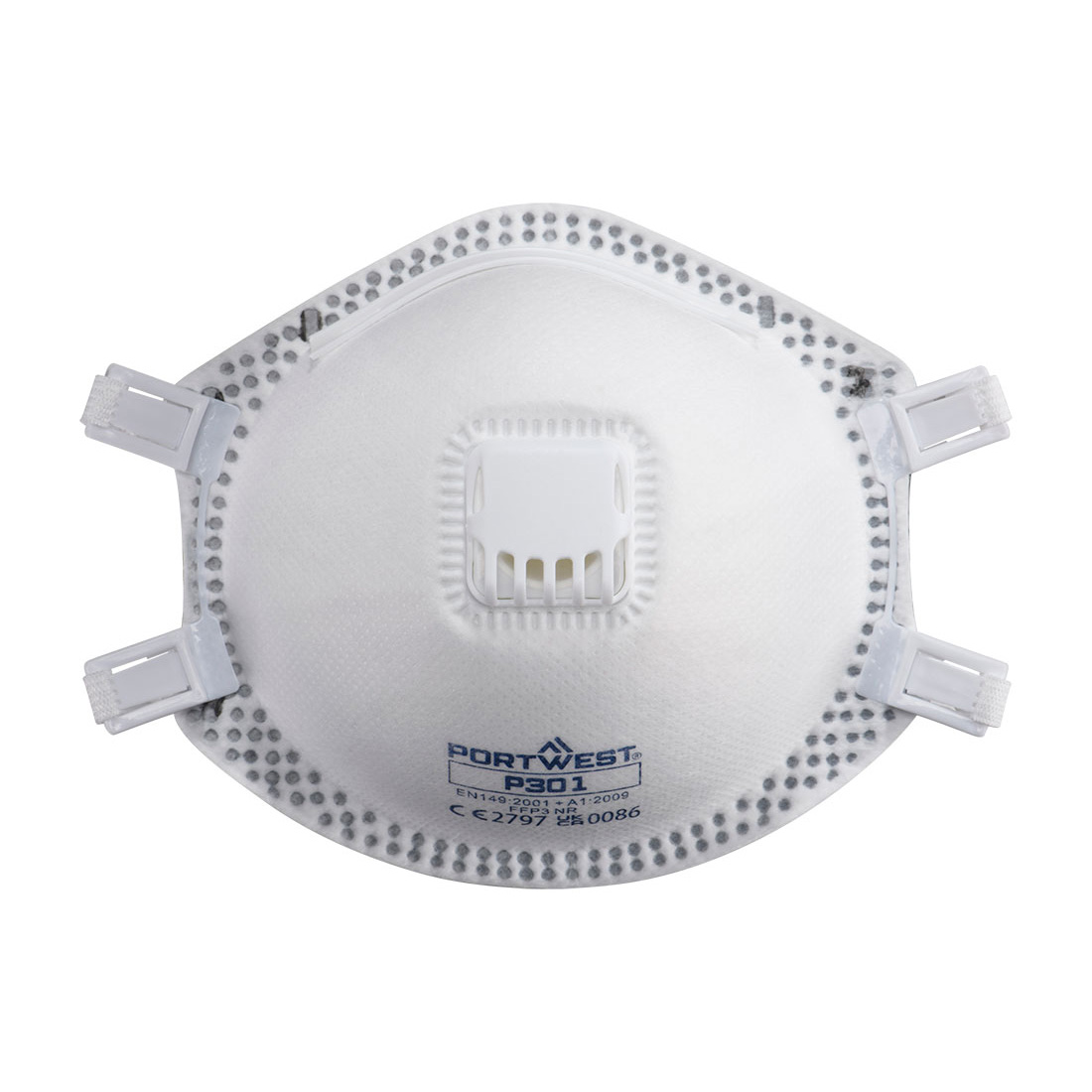
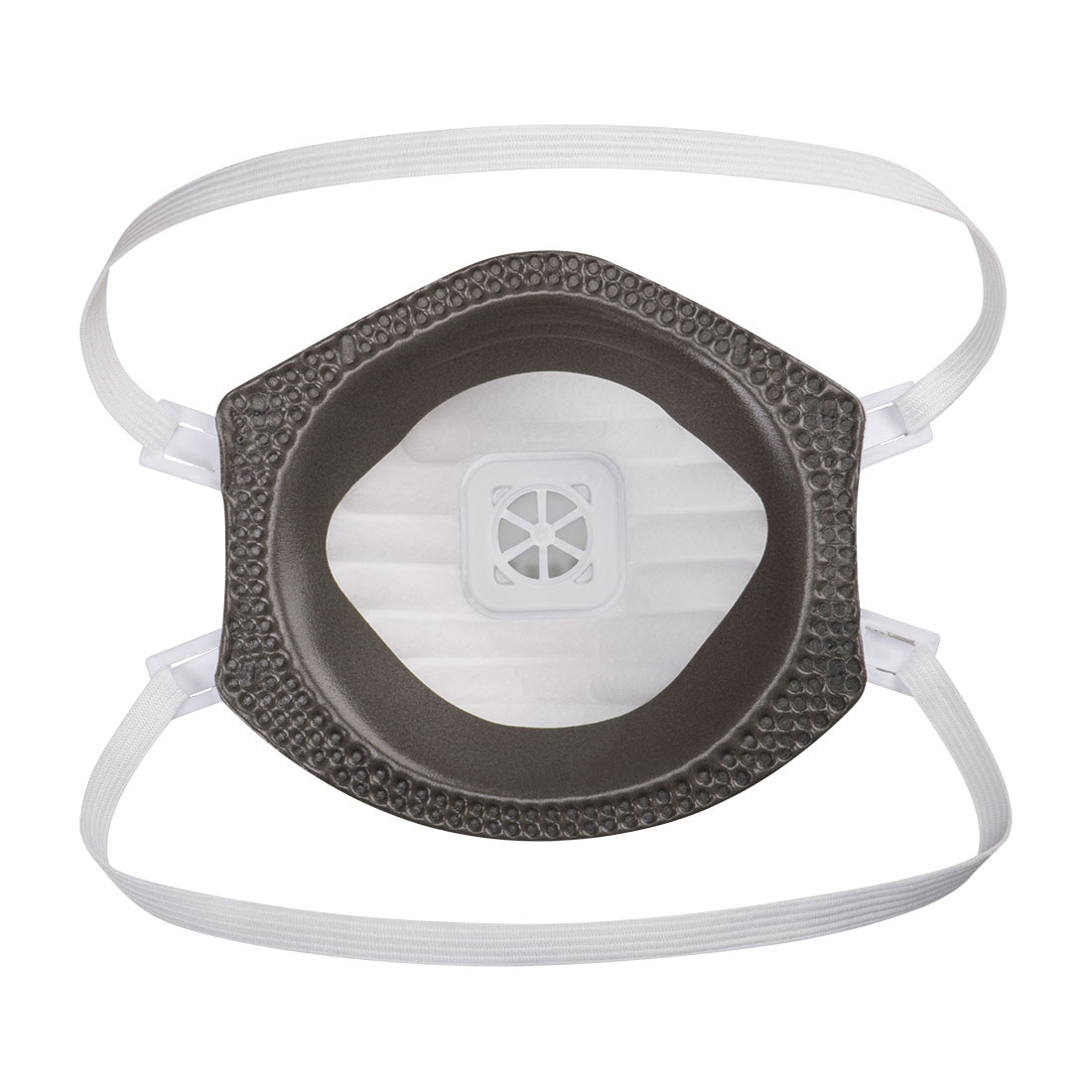
Portwest P301 FFP3 Valved Respirator
Portwest P301 provides a disposable FFP3 cup respirator with an exhalation valve. This listing supplies ten masks for workplaces where the assessed particle hazard calls for this type of protection.
The facepiece has an all-round internal foam gasket, an adjustable nose clip and wide adjustable elastic head straps. These features let the wearer position the mask, while the valve helps warm exhaled air escape. Correct fit remains essential to its performance.
The P301 is classified FFP3 NR under EN 149. For a model carrying the additional dolomite clogging-test designation, compare the P303 FFP3 valved dolomite respirator. Select by the full specification and individual fit, rather than appearance alone.
Review the respiratory protection range when choosing suitable equipment. Consider the actual contaminant, exposure concentration, work duration and other PPE, and arrange competent face-fit testing for the selected model before use.
Key Features & Benefits
- FFP3 NR particle respirator supplied in a pack of ten.
- Preformed cup facepiece with an exhalation valve.
- Internal foam gasket around the facepiece.
- Adjustable nose clip for positioning at the nose bridge.
- Wide adjustable elastic head straps.
- Polypropylene and EVA foam construction.
Directions for Use
1. Select the correct protection
Use the workplace exposure assessment to confirm that this respirator is adequate. Arrange a face-fit test for the wearer and the selected make, model and size. Read the pack instructions and check the expiry date before issue.
2. Inspect, fit and adjust
Check the facepiece, valve and straps for damage. Fit the mask over the nose and mouth, under the chin, and position the straps according to the supplied instructions. Adjust the nose clip and strap tension without modifying the respirator.
3. Check the face seal
Carry out the manufacturer's seal check every time the mask is fitted. Keep facial hair clear of the sealing area and ensure eyewear or other PPE does not break the seal. Do not enter the exposure area if the mask cannot be fitted correctly.
4. Replace and store correctly
Follow the supplied single-use and single-shift limits. Leave the exposure area safely if the mask is damaged or breathing becomes difficult. Do not wash the facepiece for reuse. Store unused masks in their original packaging in clean, dry conditions as instructed.
Product Specifications
| Specification |
Details |
| Brand / model |
Portwest P301 |
| Standard and classification |
EN 149:2001+A1:2009 FFP3 NR |
| Facepiece design |
Cup shape with exhalation valve |
| Internal gasket |
All-round foam |
| Materials |
Polypropylene and EVA foam |
| Adjustment |
Nose clip and wide adjustable elastic head straps |
| Colour |
White |
| Pack quantity |
10 disposable respirators |
FAQs
How many P301 masks are in the pack?
This listing supplies ten disposable Portwest P301 respirators.
Does P301 have an internal face gasket?
Yes. An all-round foam gasket sits inside the facepiece. It does not guarantee a seal for every wearer, so face-fit testing and correct fitting are still required.
Can the head straps be adjusted?
Yes. The wide elastic head straps are adjustable. Follow the supplied fitting procedure and check the seal after adjustment.
What is the difference between P301 and P303?
P301 is classified FFP3 NR. P303 carries the additional D marking for the optional dolomite clogging test. A change of model also requires the wearer's fit suitability to be confirmed.
Can P301 be cleaned for another shift?
No. NR identifies a non-reusable respirator. Follow the manufacturer's single-use and disposal instructions, replacing the mask sooner if its condition requires.
Does FFP3 mean it is suitable for every exposure?
No. The exposure assessment, wearer fit and conditions of use determine suitability. P301 is a particle respirator, not a general gas or vapour filter, and it does not supply oxygen.