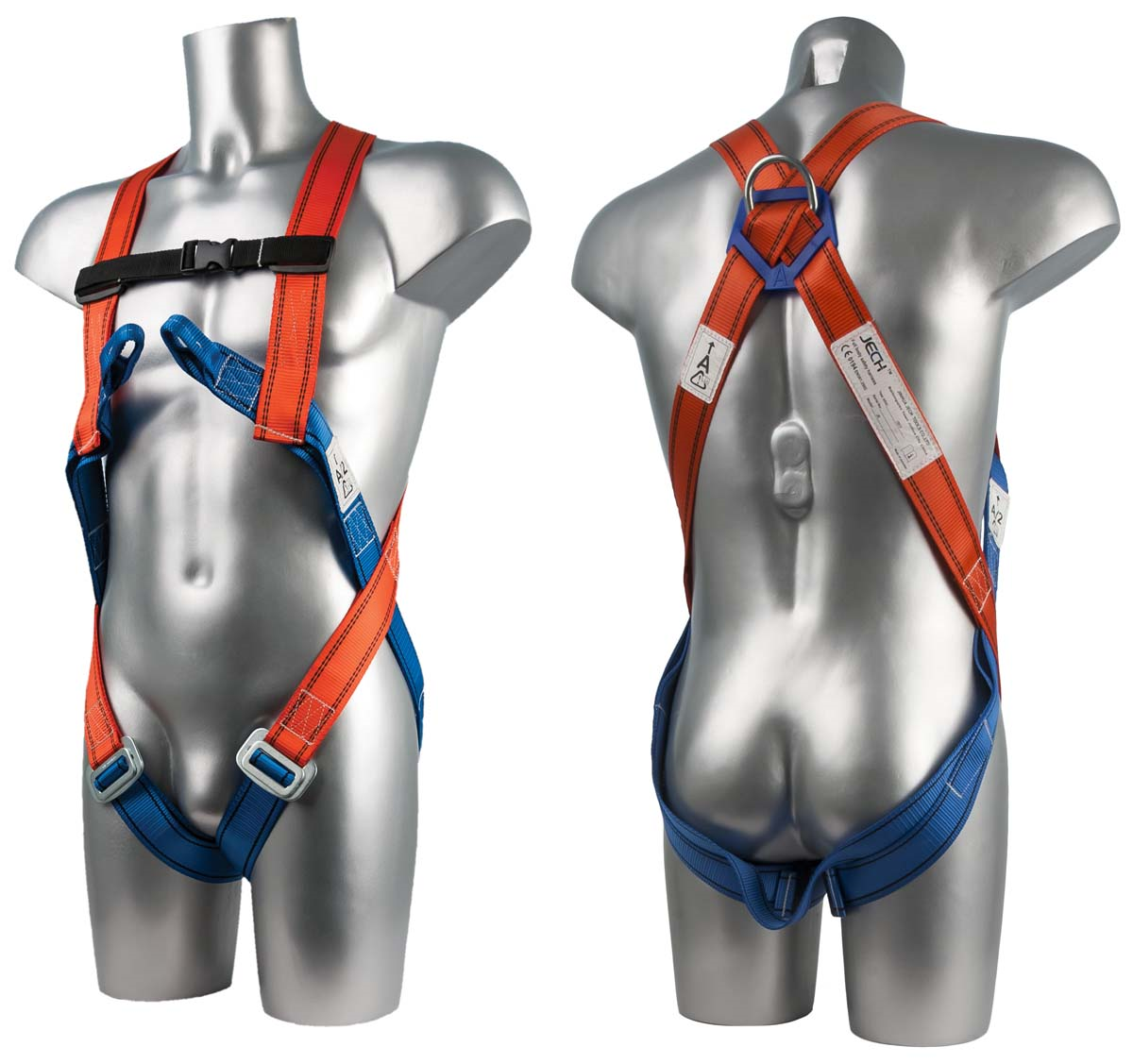
Portwest FP12 Two Point Full-Body Harness
The Portwest FP12 Two Point Harness provides a sliding dorsal D-ring at the rear and two chest loops at the front. This attachment arrangement gives a competent person defined connection options when selecting a compatible height-safety system. Choose the attachment specified for the work method and follow Portwest's instructions for connecting the paired front loops.
Polyester webbing and heat-treated alloy steel hardware form the harness construction. Chest and leg adjustments allow the fit to be set for the wearer, while flat-bar buckles secure the adjustable straps. The product photographs show the front and rear arrangement, helping buyers identify this model before ordering equipment for their team.
A protective label cover helps preserve the identification information needed for checks and equipment records. Portwest lists EN 361:2002 and a 100kg maximum rated load for the FP12. Review those details together with the instructions and limits of the other fall-prevention equipment used in the system.
The harness is one part of the working arrangement, so suitable anchorage, connecting equipment, clearance and rescue provision must also be planned. Correct fitting and inspection are essential whenever the equipment is issued. If you need to confirm a product detail before selecting the FP12, contact Astral Hygiene with the model reference and equipment requirements.
Key Features & Benefits
- Rear dorsal D-ring: a sliding rear attachment for use as directed within the selected system.
- Front chest loops: paired loops provide the front connection arrangement described by Portwest.
- Chest and leg adjustments: allow the harness fit to be set for the wearer and intended work clothing.
- Flat-bar buckles: adjustment hardware accompanies the polyester webbing construction.
- Protected product identification: a label cover helps preserve information used for inspection and traceability.
- Defined specification: Portwest lists EN 361:2002 and a maximum rated load of 100kg.
Directions for Use
1. Select the attachment arrangement and system
A competent person should assess the task and specify compatible anchorage and connecting equipment. Read the FP12 instructions and choose the permitted attachment for the work method. Check all rated loads, required fall clearance and rescue arrangements before work begins.
2. Inspect the complete harness
Check the webbing, stitching, chest loops, D-ring, buckles and labels before each use. Confirm the equipment history and required examination records. Do not issue a harness that is damaged, has arrested a fall or has an uncertain condition.
3. Fit and connect according to Portwest's instructions
Adjust the chest and leg straps using the supplied fitting sequence, with correctly routed webbing and secured buckles. Follow the specified method for connecting the front chest loops; do not improvise a connection to one loop. Recheck fit and compatibility before entering the work area.
4. Maintain the harness between uses
Follow the manufacturer's cleaning, drying and storage guidance and protect the equipment from damaging conditions. Keep inspection records and arrange examinations by a competent person at the required intervals. Apply Portwest's withdrawal and retirement instructions after a fall or whenever damage is suspected.
Product Specifications
| Specification |
Details |
| Brand / model |
Portwest FP12 |
| Product type |
Two Point full-body harness |
| Attachments |
Sliding rear dorsal D-ring and two front chest loops |
| Materials |
Polyester webbing and heat-treated alloy steel |
| Adjustment |
Chest and legs |
| Buckles |
Flat-bar type |
| Identification |
Product label with protective cover |
| Maximum rated load |
100kg; follow the supplied limits |
| Standard listed by Portwest |
EN 361:2002 |
| Manufacturer's stated shelf life |
10 years from the manufacturing date on the label; condition and instructions may require earlier retirement |
FAQs
What does the two-point arrangement provide?
The FP12 has a rear dorsal D-ring and two front chest loops. These provide the model's rear and front attachment arrangements. Select the connection required by the assessed system and follow the marked purposes and supplied instructions.
Can one chest loop be connected on its own?
Do not improvise a single-loop connection. Follow Portwest's instructions for connecting the paired front loops with suitable equipment. Correct connection is part of the complete system assessment and should be understood before the harness is used.
What adjustments are available?
The harness has chest and leg adjustment points. Follow the manufacturer's fitting sequence to set them over the user's work clothing, and check the webbing routing and buckles. Reassess fit when the harness is issued to a different wearer.
What standard and load rating apply to FP12?
Portwest lists EN 361:2002 and a maximum rated load of 100kg. Check the supplied loading instructions and the limits of all other components. Certification and a rated load do not replace suitable anchorage, clearance or a rescue plan.
Is the stated ten-year shelf life guaranteed service life?
No. Portwest states a ten-year shelf life from the manufacturing date shown on the product label. Use, condition, equipment history and inspection findings can require earlier withdrawal. Follow the supplied retirement criteria and do not continue using suspect equipment because it is younger than that limit.
Does buying the harness provide a complete fall-arrest system?
No. The appropriate connecting equipment and anchorage must be selected for the task, with compatible components, sufficient clearance and rescue arrangements. Trained users must inspect and fit the harness correctly and follow the instructions for every part of the system.