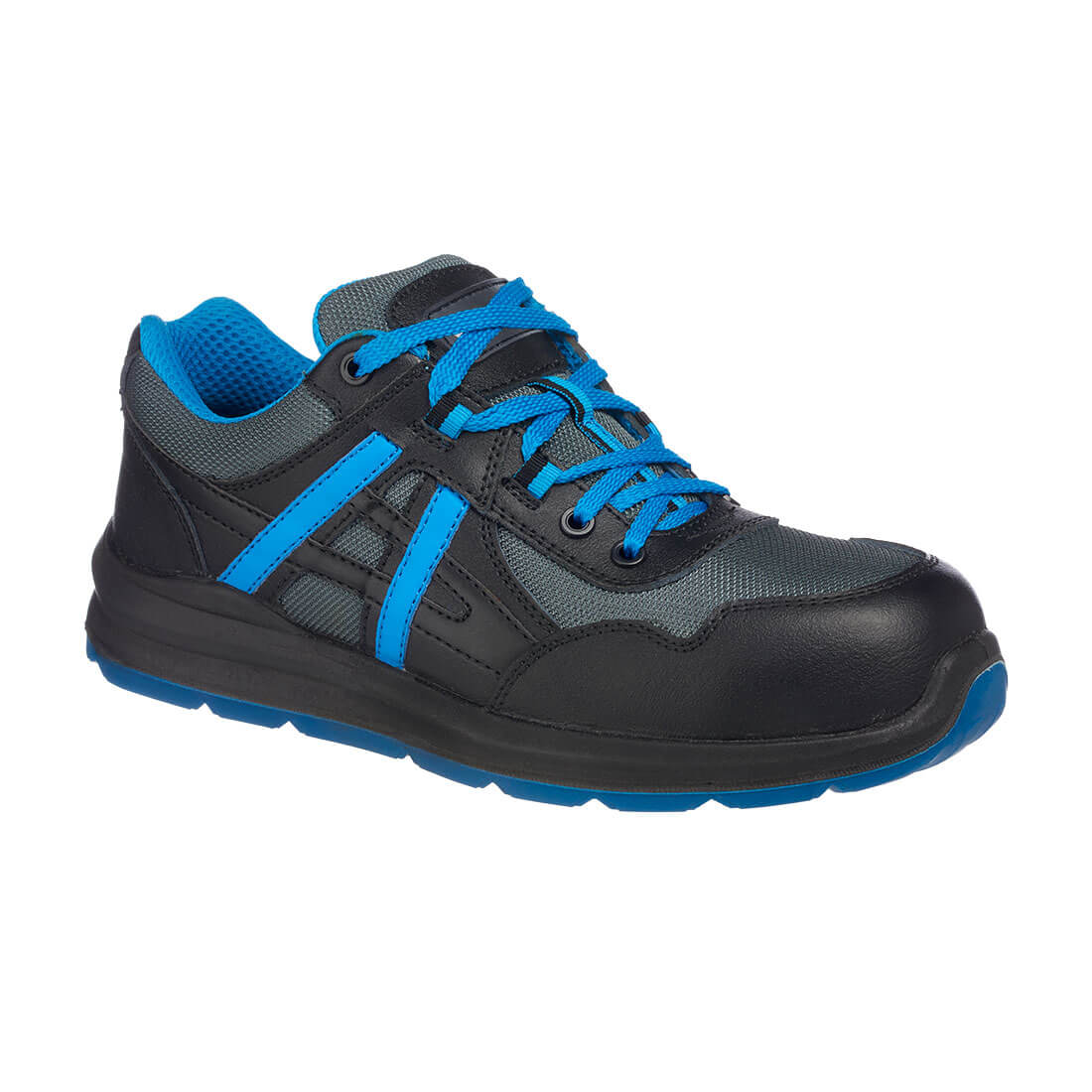
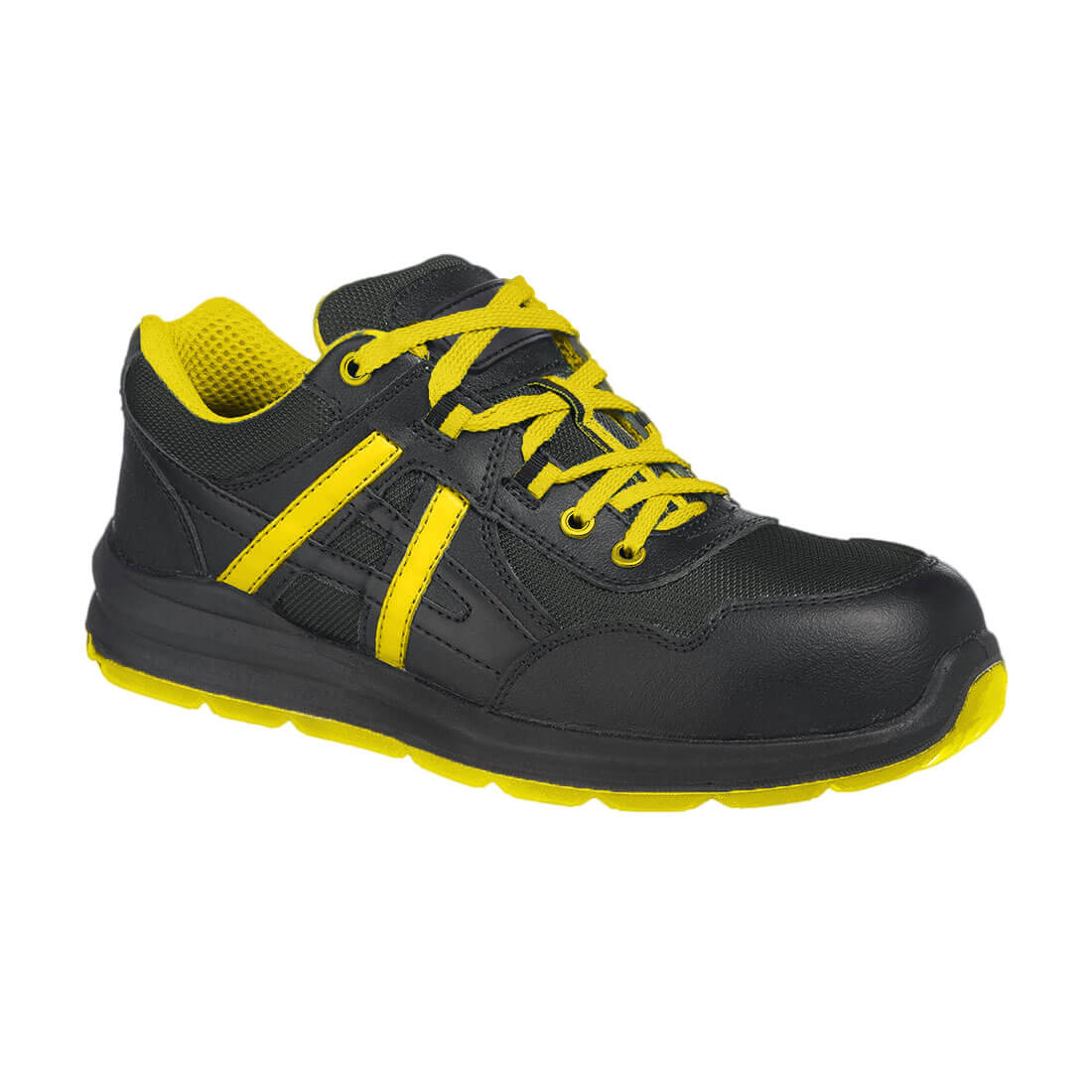
FT60 - Composite Leather and Mesh Trainer S1P SRC
The Portwest FT60 Mersey is a low safety trainer with composite protection at the toes and beneath the foot. Its metal-free construction gives teams an alternative to steel safety footwear when the task calls for toe and penetration protection in a trainer shape.
A leather and mesh upper combines with a breathable 3D mesh lining and cushioned footbed. The stitched leather toe bumper reinforces the front of the upper, while the dual-density PU/PU sole includes heel energy absorption for everyday working comfort.
The manufacturer specifies EN ISO 20345:2011 S1P SRC for this model. Consider the FT60 for dry warehouse, logistics or maintenance duties that match this rating, and check the supplied footwear instructions against the hazards present in your workplace.
Choose Black/Blue or Black/Yellow in the listed EU sizes. Compare other safety trainers when selecting a fastening and upper style, or browse work and safety shoes for alternative low footwear with the protection your task requires.
Key Features & Benefits
- Composite safety toe cap.
- Penetration-resistant composite midsole.
- Metal-free construction.
- Leather and mesh upper with a stitched leather toe bumper.
- Breathable 3D mesh lining and cushioned footbed.
- Dual-density PU/PU sole with heel energy absorption.
- Manufacturer specification: EN ISO 20345:2011 S1P SRC.
- Black/Blue and Black/Yellow options in EU 36–48.
Directions for Use
1. Match the footwear to the task
Read the supplied markings and user instructions before use. Compare the protection with the workplace assessment, including sharp objects, floor contamination and moisture exposure.
2. Check the fit
Try both shoes with your normal work socks. Adjust the laces to hold the heel securely, check toe space and walk in the shoes before deciding that the fit is suitable.
3. Inspect before each shift
Check the upper, stitching, fastening and soles for wear or damage, and remove debris from the tread. Take footwear out of service if damaged or subjected to a significant impact.
4. Clean and store correctly
Follow the care instructions supplied for the leather and mesh upper. Remove dirt carefully, dry damp footwear naturally away from direct heat, and store it in a dry, ventilated area.
Product Specifications
| Specification |
Details |
| Brand / model |
Portwest FT60 Mersey |
| Style |
Low lace-up safety trainer |
| Upper |
Leather and mesh |
| Lining |
Breathable 3D mesh |
| Toe protection |
Composite toe cap |
| Underfoot protection |
Penetration-resistant composite midsole |
| Construction |
Metal free |
| Sole |
Dual-density PU/PU |
| Comfort features |
Cushioned footbed; heel energy absorption |
| Manufacturer standard |
EN ISO 20345:2011 S1P SRC |
| Listed colours |
Black/Blue or Black/Yellow |
| Listed sizes |
EU 36–48; select an available combination |
FAQs
Does the FT60 include underfoot protection?
Yes. Portwest specifies a penetration-resistant composite midsole alongside the composite toe cap. Check that the supplied pair's marking meets the underfoot protection required by your workplace assessment.
How does the FT60 differ from the FT50?
The FT60 uses composite toe and midsole protection in a metal-free design. The FT50 listing specifies a steel toe and no protective midsole, so the two models should not be treated as interchangeable safety categories.
Is the FT60 waterproof?
A waterproof membrane is not specified for this model. Choose footwear with suitable additional water protection if regular wet conditions are part of the task.
What does the SRC specification tell me?
Portwest lists SRC slip resistance under the stated 2011 standard. It is a tested property, not a guarantee on every floor; keep tread clear and follow workplace spill-control procedures.
Which colours and sizes are listed?
The listing offers Black/Blue and Black/Yellow, with EU sizes from 36 to 48. Select the required combination and check its availability before ordering.
When should the trainers be replaced?
Inspect them regularly and follow the supplied replacement guidance. Damage, substantial wear or a significant impact can affect protection, even when the shoe remains comfortable to wear.