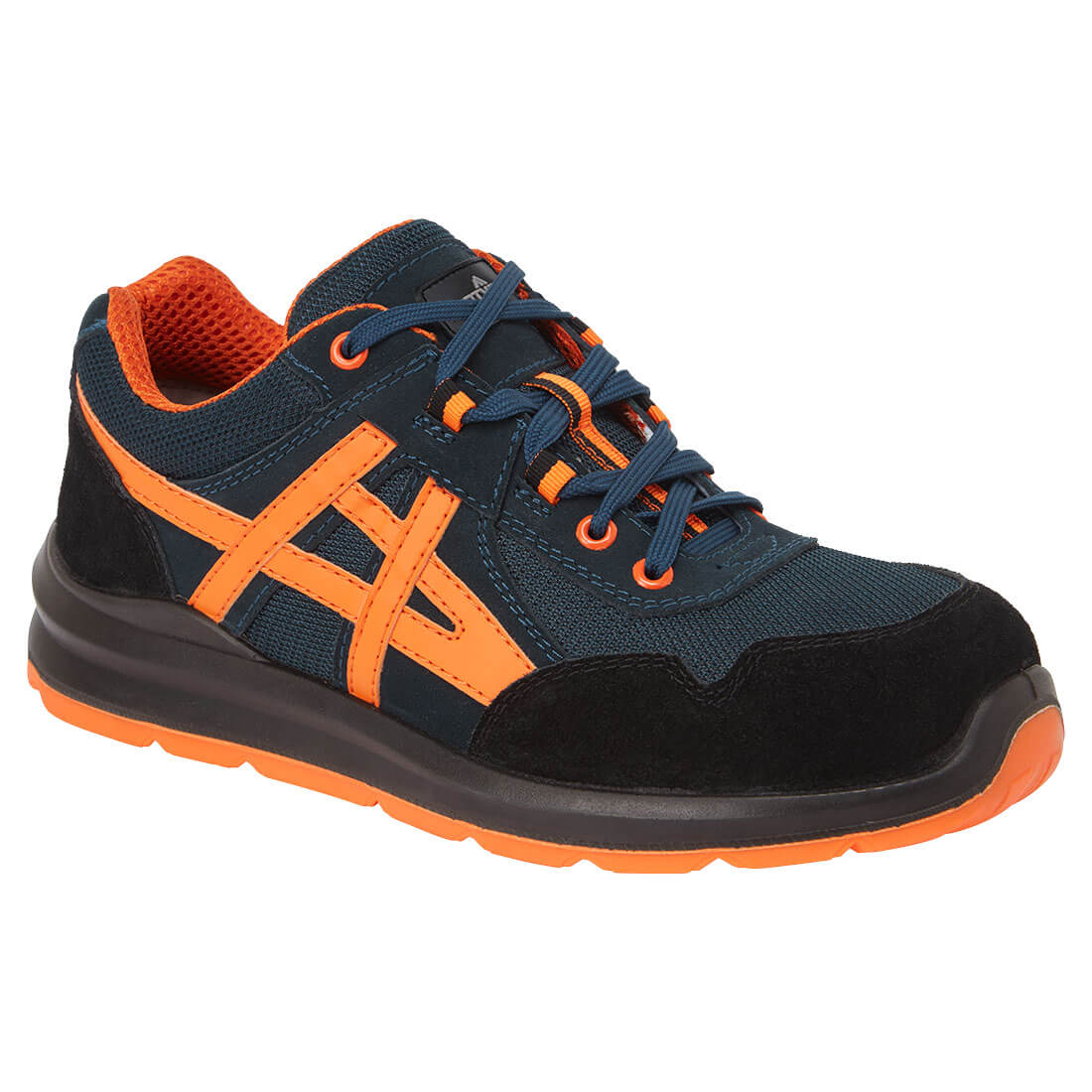
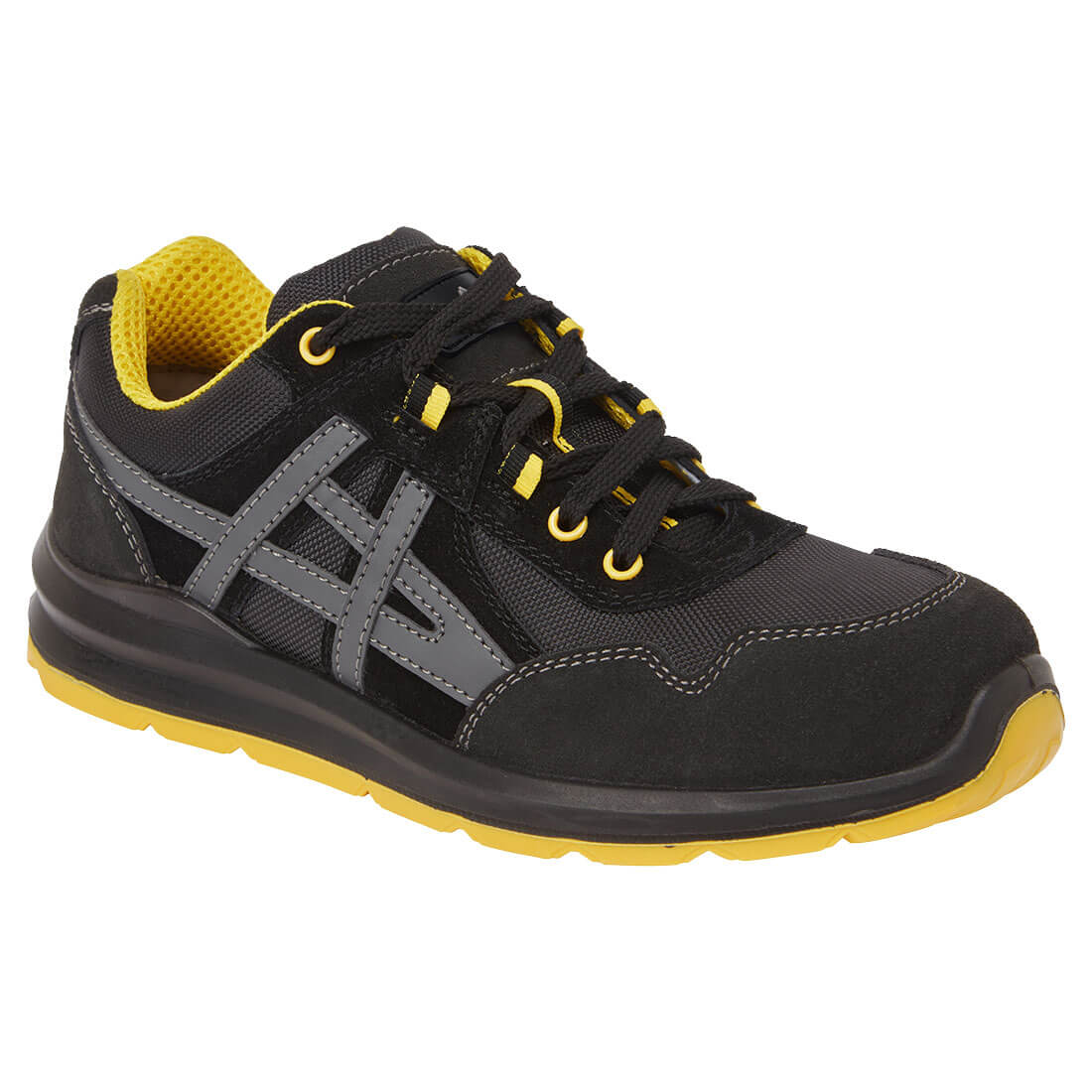
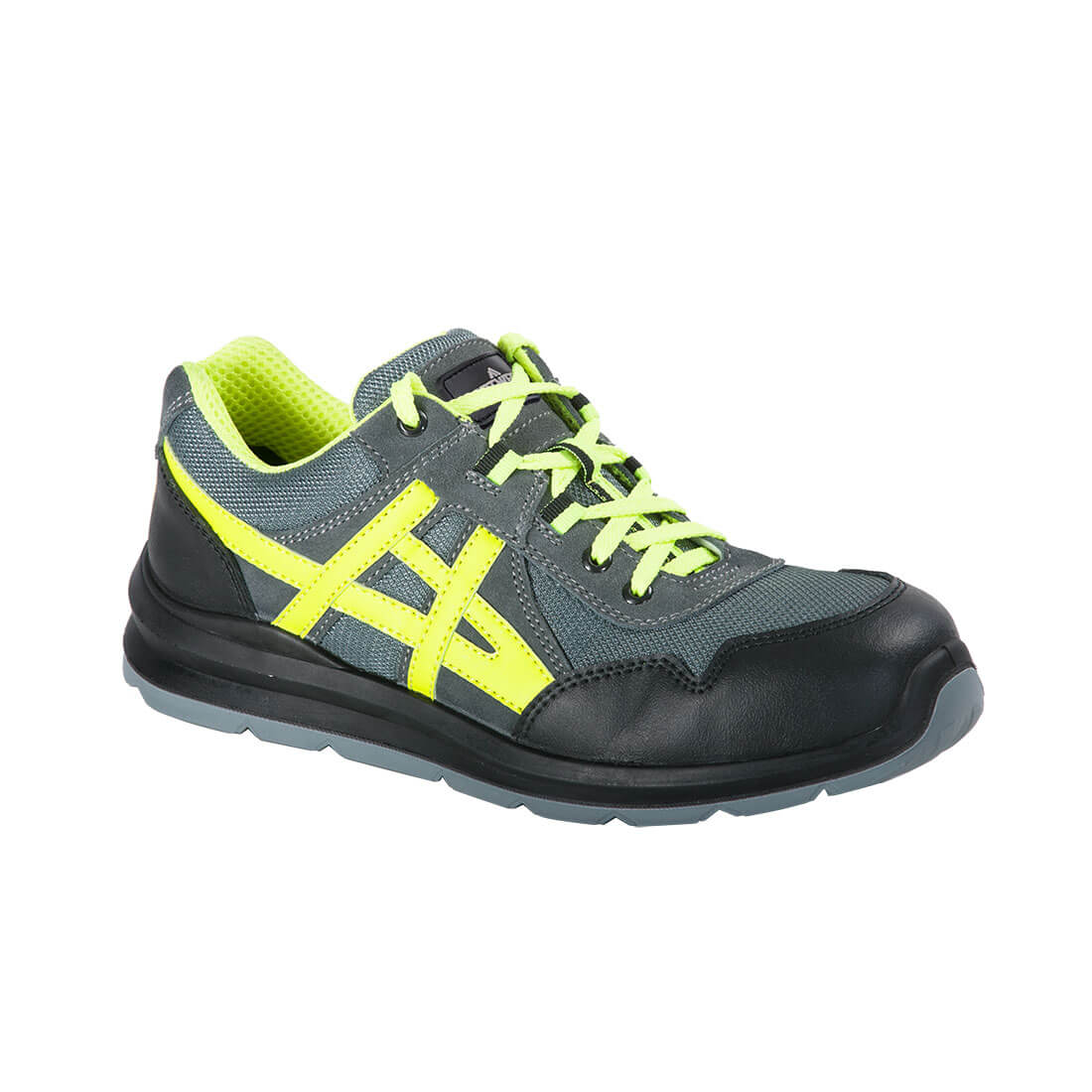
FT50 - Steel Leather and Textile Trainer S1 FO SR
The Portwest FT50 combines a low trainer shape with a protective steel toe cap for work where this level of protection is appropriate. Its suede leather and textile upper gives the shoe a sporty appearance, with a stitched leather bumper reinforcing the front of the upper.
Inside, the breathable 3D mesh lining and cushioned footbed support everyday comfort. The dual-density PU/PU sole includes heel energy absorption, making the FT50 a practical option to consider for dry warehouse, service and light industrial duties.
Portwest's current specification is EN ISO 20345:2022 +A1:2024 S1 FO SR. The manufacturer lists antistatic properties and a fuel- and oil-resistant outsole. No puncture-resistant midsole is specified, so match the footwear to the hazards identified for the job.
Choose from the listed colours and EU sizes, then check the fit with your usual work socks. Compare other safety trainers or work and safety shoes if the task needs different protection, construction or fit.
Key Features & Benefits
- Protective steel toe cap.
- Suede leather and textile upper with a stitched leather toe bumper.
- Breathable 3D mesh lining.
- Cushioned footbed and heel energy absorption.
- Dual-density PU/PU sole.
- Antistatic properties.
- Current S1 FO SR specification, including slip resistance and a fuel- and oil-resistant outsole.
- Three listed colour combinations and EU 36–48 size options.
Directions for Use
1. Check the required protection
Compare the supplied pair's markings and instructions with the workplace assessment. Choose a different model if puncture resistance, waterproofing or another property outside the FT50 specification is required.
2. Select a secure fit
Try both shoes with the socks normally worn at work. Adjust the laces so the heel is held securely and the toes have room, then check comfort while standing and walking.
3. Inspect before use
Check the uppers, stitching, laces and soles for damage or excessive wear. Remove trapped tread debris and take damaged footwear out of service, including after a significant impact.
4. Clean and store
Follow the supplied suede and textile care instructions. Remove dirt carefully, allow damp footwear to dry naturally away from direct heat, and store it in a dry, ventilated place.
Product Specifications
| Specification |
Details |
| Brand / model |
Portwest FT50 |
| Style |
Low lace-up safety trainer |
| Upper |
Suede leather and textile |
| Lining |
Breathable 3D mesh |
| Toe protection |
Steel toe cap |
| Protective midsole |
No puncture-resistant midsole specified |
| Sole |
Dual-density PU/PU |
| Comfort features |
Cushioned footbed; heel energy absorption |
| Current manufacturer standard |
EN ISO 20345:2022 +A1:2024 S1 FO SR |
| Listed colours |
Navy/Orange, Black/Yellow, Grey/Fluorescent Yellow |
| Listed sizes |
EU 36–48; choose an available colour and size |
FAQs
Does the FT50 have a puncture-resistant midsole?
No protective midsole is specified for this S1 trainer. If sharp objects underfoot are part of the workplace risk, select footwear with the required penetration-resistance marking.
Is this trainer metal free?
No. The FT50 uses a steel toe cap. Where a metal-free design is needed, compare the construction of a suitable alternative rather than choosing by trainer appearance alone.
Is the FT50 waterproof?
Waterproof protection is not specified for this suede and textile model. Assess the expected conditions and choose footwear with suitable water protection for regular wet work.
Which safety standard applies?
The current Portwest sheet and declaration list EN ISO 20345:2022 +A1:2024 S1 FO SR. Check the supplied pair's markings and instructions, particularly when comparing it with an older FT50 version.
Does slip resistance remove the risk of slipping?
No. Grip also depends on the floor, contamination, tread condition and the way the footwear is used. Keep soles clean and follow the site's floor-care and spill-response procedures.
How do I choose between the available sizes?
Select the colour and EU size shown in the options, then check both shoes with your work socks. A secure heel and comfortable toe space matter more than matching an old shoe's size label alone.