

Why Colour Coded Cleaning Matters in the Workplace
Reduce cross contamination and improve workplace hygiene with a simple, effective colour coded cleaning system.
Keeping a workplace visibly clean is important — but maintaining proper hygiene is even more essential. While a quick vacuum or mop may make an area look spotless, harmful bacteria and germs can still remain. That’s why colour coded cleaning is such an effective system for workplaces. By assigning specific cleaning equipment to designated areas, businesses can significantly reduce the risk of cross contamination and help create a safer environment for staff and visitors. Recommended by the British Institute of Cleaning Science, colour coding helps ensure cleaning equipment is only used where it’s intended, preventing bacteria from spreading from one area to another. In this blog, we’ll explain how colour coded cleaning works, why it’s important, and how to implement it effectively in your workplace.
What Is Colour Coded Cleaning?
Colour coded cleaning is a hygiene system where different coloured cleaning equipment is assigned to specific areas of a building. This helps staff instantly identify which products should be used where, lowering the risk of contamination between high-risk and low-risk areas.
Typically, workplaces colour code items such as:
- Mops and mop buckets
- Cloths and sponges
- Dustpans and brushes
- Gloves and cleaning handles
The most commonly used colours are: Blue, Green, Red, Yellow. Each colour represents a particular area or cleaning task.
Standard Colour Coding Guide
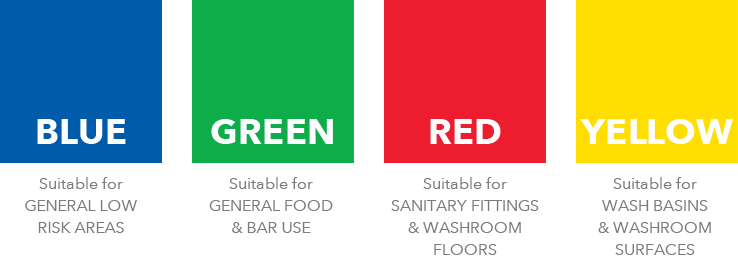
Blue – General Low-Risk Areas
Blue equipment is usually used in public or low-risk environments such as:
- Reception areas
- Offices
- Corridors
- Waiting rooms
- Lobbies
Green – Kitchens & Food Preparation Areas
Green is commonly assigned to food-related environments, including:
- Kitchens
- Food prep stations
- Bars and cafés
- Areas where food is stored or handled
Red – Toilets & Washrooms
Red equipment should only be used in high-risk sanitary areas such as:
- Toilets
- Urinals
- Shower areas
- Bathroom floors
Yellow – Washroom Sinks & Touchpoints
Yellow is generally used for lower-risk washroom surfaces, including:
- Sinks
- Bathroom counters
- Mirrors
- Soap dispensers and touchpoints
While these are the standard industry colours, businesses can adapt their system to suit their environment — as long as all staff clearly understand and follow it consistently.
Why Is Colour Coding So Important?
Using the same cleaning equipment across multiple areas can spread bacteria quickly and increase the risk of cross contamination. For example, using a cloth in both a washroom and a kitchen could transfer harmful germs to food preparation areas.
Implementing a colour coded cleaning system helps to:
- Reduce the spread of bacteria and viruses
- Improve workplace hygiene standards
- Minimise cross contamination risks
- Create a safer environment for staff and visitors
- Support compliance with workplace hygiene procedures
It also makes cleaning routines easier to manage, especially in busy environments such as restaurants, schools, healthcare settings, offices, and hospitality venues.
Watch Anna's Vlog!
Best Practices for Effective Colour Coded Cleaning
According to British Institute of Cleaning Science guidelines, there are several key steps businesses should follow to ensure colour coding is effective:
1. Train All Staff Properly
Every employee should receive clear training on the colour coding system as part of their induction and ongoing workplace training.
2. Keep the System Simple
Your cleaning system should be easy to understand and simple to follow. Clear labels and consistent colours help prevent mistakes.
3. Consider Colour Blindness
Some employees may struggle to distinguish certain colours. Including symbols, labels, or text alongside colours can improve accessibility and understanding.
4. Always Clean from Cleanest to Dirtiest
One of the golden rules of professional cleaning is to work from the cleanest area towards the dirtiest area. This significantly reduces the risk of contamination spreading during cleaning tasks.
Why Environmental Health Officers Check Colour Coding
Environmental Health inspections often include checks on workplace cleaning procedures. One of the first things inspectors look for is evidence of a clear colour coded cleaning system.
This can include:
- Colour coded mops and buckets
- Cloths and gloves
- Cleaning station signage
- Hygiene posters displayed in cleaning areas
Having a clear system in place demonstrates that your business understands and takes hygiene responsibilities seriously.
Is Colour Coded Cleaning a Legal Requirement?
There is currently no specific law stating that businesses must use colour coded cleaning equipment. However, employers are legally responsible for maintaining a safe and hygienic workplace under regulations such as Health and Safety Executive guidance and Control of Substances Hazardous to Health regulations.
Using a colour coded cleaning system is one of the most effective ways to support hygiene compliance and reduce workplace risks.
Colour Coded Cleaning Equipment from Astral Hygiene
At Astral Hygiene, we supply a wide range of colour coded cleaning equipment to help businesses maintain safe and hygienic environments.
Our range includes:
- Colour coded mops and buckets
- Cleaning cloths and sponges
- Brushes and dustpans
- Gloves and janitorial equipment
Whether you run a school, restaurant, office, healthcare facility, or hospitality venue, colour coded cleaning can help improve hygiene standards and reduce the risk of cross contamination.
Recommended Products

The 14L Colour-Coded Mop Bucket & Wringer is a practical choice for everyday floor cleaning in offices, schools, hospitality venues and other commercial premises. Its compact plastic design includes a removable wringer, helping cleaning teams control moisture when preparing a suitable mop for use. Choose red, blue, yellow or green to match the equipment colours assigned by your premises’ cleaning policy. Supplied individually, this mop bucket provides a straightforward addition to a janitorial cleaning kit. Pair it with an appropriately sized mop head and compatible handle, and follow the floor cleaner’s dilution instructions. Empty and rinse the bucket after each task, clean the wringer and allow both parts to dry before storage.

The 137cm Colour-Coded Hygiene Handle is an aluminium handle for cleaning heads with a compatible T1 screw fitting. Use it to replace a worn handle or assemble mop, brush and squeegee equipment for everyday floor-cleaning tasks. Its coloured grip comes in white, red, green, blue and yellow, helping teams identify equipment assigned to different cleaning areas. Supplied as a handle only, it lets you choose a suitable head for the job and maintain your existing compatible tools. Check the head’s fitting before ordering, then secure it according to the assembly instructions. After cleaning, wipe away dirt and residues, dry the handle and return the tool to its designated storage area.

All-Purpose Cleaning Cloths provide a convenient supply of lightweight wipes for everyday surface cleaning, spill collection and general wiping. Supplied in a pack of 50, these non-woven cloths are available in blue, green, red and yellow, making it easier to assign separate equipment to different cleaning areas. The 60 x 30cm wipes are made from a viscose and polyester blend with a perforated structure for absorbency and dirt collection. They are disposable cleaning wipes, useful in kitchens, bars, cafés, offices and housekeeping routines where fresh cloths are needed regularly. Match the cloth and any cleaning product to the surface, replace soiled wipes promptly and follow your site’s hygiene procedure.