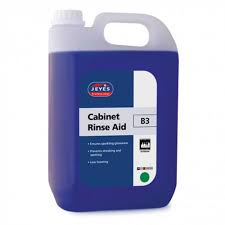
Jeyes B3 Cabinet Rinse Aid – Case of 2 × 5L
Jeyes B3 Cabinet Rinse Aid supports the rinse stage of enclosed cabinet glasswashing machines. It helps washed glasses dry with fewer visible streaks and spots, making it useful for bars, pubs, restaurants and hotel drinks service. This case contains two 5L bottles, providing 10 litres in total for replenishment.
The low-foaming liquid is formulated for machine glasswashing, where rinse performance contributes to the presentation of finished glasses. B3 is a clear blue, odourless product. Use it in the rinse-aid supply specified for the installation, keeping the detergent and rinse-aid feeds clearly identified.
Rinse aid complements the wash detergent rather than replacing it. Good results also depend on correct loading, effective washing and rinsing, and routine equipment care. Check the glasswasher and supplied label before setting up dosing, and keep the machine's water-treatment and maintenance arrangements working as intended.
Stock the rinse stage alongside a suitable cabinet glasswash detergent, and review other bar cleaning supplies for separate service-area tasks. Keep B3 in its original labelled container and protect the dispensing connection from contamination during bottle changes. Retain the product information and safety sheet where staff can consult them.
Key Features & Benefits
- Rinse-stage additive: intended for enclosed cabinet glasswashing machines.
- Supports drying: helps improve the finish of washed drinking glasses.
- Reduces visible streaks and spots: supports glass presentation when the machine is operating correctly.
- Low-foaming formulation: designed for machine glasswashing.
- Clear blue, odourless liquid: identified as Jeyes B3 / YB03.
- Case of two 5L bottles: 10 litres total for planned replenishment.
Directions for Use
1. Confirm the product and machine
Check that the equipment is an enclosed cabinet glasswasher suitable for B3 rinse aid. Read the supplied label, safety information and machine instructions before starting. Confirm which feed or reservoir is intended for rinse aid, and keep a separate suitable detergent in the wash-stage supply.
2. Replenish the rinse-aid supply
Connect or fill the designated rinse-aid supply using the method specified for the glasswasher. Set dosing according to the supplied label and equipment instructions; do not estimate a universal dilution. Avoid splashing and eye contact, and use any protective equipment required by the current safety sheet and workplace assessment.
3. Complete the wash and rinse cycle
Rack suitable glasses as directed by the machine manufacturer and run the correct programme. Allow the full rinse stage to finish and let the glasses dry before returning them to service. Check the finish; if spotting persists, check dosing, wash performance, rinse conditions and water treatment before changing settings.
4. Store and maintain correctly
Keep unused product in the original container, closed when not in use, at normal ambient storage conditions. Store separately from strong acids, strong bases and oxidising products. Keep the feed arrangement clean, follow the equipment's maintenance schedule and deal with spills or empty containers through the site's chemical-handling procedure.
Product Specifications
| Specification |
Details |
| Brand |
Jeyes Professional |
| Product |
B3 Cabinet Rinse Aid |
| Stock identification |
YB03 / B3 |
| Case contents |
2 × 5L bottles; 10L total |
| Application |
Rinse stage of enclosed cabinet glasswashers |
| Formulation |
Low-foaming rinse additive |
| Appearance |
Clear blue liquid |
| Odour |
Odourless |
| pH |
1.7–2.5, as listed in the manufacturer product information |
| Unopened stability |
2 years at ambient temperatures |
| Dosing |
Follow the supplied label and glasswasher instructions |
| Use restriction |
Machine glasswashers only; not a manual washing-up liquid |
| Storage |
Original labelled container, closed when not in use |
FAQs
What pack size does this listing supply?
The case contains two 5-litre bottles of Jeyes B3 Cabinet Rinse Aid, giving 10 litres in total. Check the YB03 / B3 identification against the rinse aid specified for your installation, and keep a replacement bottle ready for scheduled replenishment.
Which machines is B3 designed for?
It is designed for enclosed cabinet glasswashing machines. Confirm compatibility with your particular machine and dosing arrangement before use. It should not be treated as a general-purpose rinse product for every dishwasher or other appliance.
Does rinse aid replace the glasswash detergent?
No. The detergent cleans during the wash stage, while B3 supports rinsing and drying. Use the correct product in each designated supply and keep the connections clearly labelled. Adding rinse aid to the detergent feed will not provide the intended washing process.
What dilution or dose should I use?
Follow the supplied product label and the glasswasher's setup instructions. The correct setting depends on the specified installation, so there is no universal hand-mixing ratio given here. If the dosing requirements are unclear, confirm them with the equipment or chemical supplier before use.
What should I check if glasses still show spots?
Check that B3 is reaching the rinse stage and that the dosing setting is correct. Also inspect washing performance, loading, rinse conditions and any water-treatment equipment. Persistent marks can require separate machine maintenance or glass renovation; adding more rinse aid without checking the cause may not resolve them.
Can B3 be used for handwashing or glass renovation?
No. B3 is a machine rinse-stage additive, not a manual detergent or a specialist renovation treatment. Choose a product intended for the separate task and follow its instructions. Keep the B3 label and matching safety sheet available for staff handling or replenishing the rinse-aid supply.