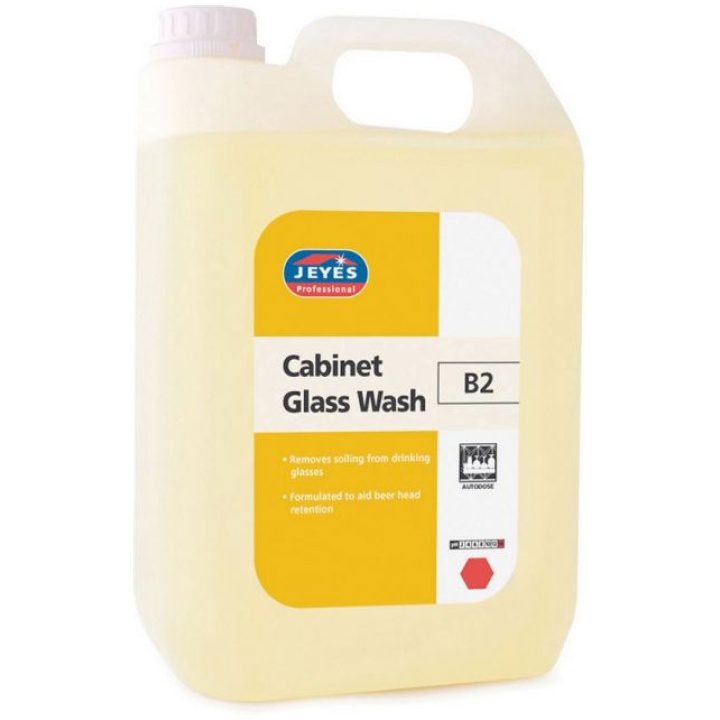
Jeyes Machine/Cabinet Glass Wash (Case of 2 x 5ltr)
Jeyes B2 Cabinet Glasswash is a concentrated detergent for enclosed glasswashing machines in bars, pubs and hospitality venues. This listing supplies two 5L containers, giving a total of 10 litres for replenishing the machine's detergent supply. Match the B2 / YB02 identification to the chemical specified for your installation.
The formulation removes soiling and lipstick marks from drinking glasses during the machine wash. Its blend of cleaning ingredients is designed to support clean glass presentation and help maintain beer head retention. Correct dosing, a suitable wash programme and a properly maintained glasswasher all contribute to the finished result.
B2 is an odourless liquid for the detergent stage of the washing process. Use it through the specified Jeyes Professional electronic dosing equipment, with the dilution set according to the dosing supplier's instructions. Keep detergent and rinse-aid connections correctly identified so each product enters the intended part of the cycle.
Plan supplies alongside other machine-washing detergents and appropriate bar cleaning products. B2 is for enclosed cabinet equipment, not open-top brush systems or hand washing. Do not use it on aluminium or galvanised metal, and handle the alkaline concentrate with the protection specified on its label and safety sheet.
Key Features & Benefits
- Enclosed cabinet glasswasher detergent: intended for the machine wash stage.
- Removes glassware soiling: formulated to tackle residues including lipstick marks.
- Supports beer head retention: helps prepare drinking glasses for drinks service when used correctly.
- Concentrated liquid: delivered through the specified electronic dosing equipment.
- Odourless liquid: for cabinet glasswashing applications.
- Two 5L containers: 10 litres total for planned replenishment.
- Clear product identification: Jeyes B2 / YB02.
Directions for Use
1. Check the machine and prepare safely
Use only in an enclosed cabinet glasswasher suitable for B2. Read the container label, matching safety sheet and equipment instructions before handling the concentrate. It causes severe skin burns and eye damage: wear protective gloves and eye protection specified for the task. Exclude aluminium and galvanised items and remove loose residues from suitable glasses before racking.
2. Connect to the correct dosing system
Dispense through Jeyes Professional electronic dosing equipment and follow the dosing supplier's instructions for dilution and setup. Confirm that the feed line is the detergent line before changing a container. Do not substitute a guessed manual dilution, pour concentrate directly onto glasses or connect it to the rinse-aid feed.
3. Run the wash and rinse cycle
Load glasses according to the machine instructions, allowing the wash and rinse water to reach all surfaces. Run the specified programme with the correct detergent setting and complete the rinse stage. Check the finished glasses before service. If results deteriorate, check the chemical supply, dosing, filters and machine condition rather than increasing the dose arbitrarily.
4. Close, store and maintain
Close containers when they are not connected for use, retain the original labelled packaging and store securely away from children, strong acids and oxidising products. Avoid splashes and skin or eye contact, and wash hands after handling. Maintain the glasswasher and dosing equipment as instructed, and follow the site's procedure for spills, empty containers and chemical waste.
Product Specifications
| Specification |
Details |
| Brand |
Jeyes Professional |
| Product |
B2 Cabinet Glasswash |
| Stock identification |
YB02 / B2 |
| Pack size |
2 x 5L containers; 10L total |
| Format |
Concentrated alkaline liquid detergent |
| Appearance |
Clear liquid |
| Odour |
Odourless |
| Application |
Enclosed cabinet glasswashing machines |
| Dispensing |
Jeyes Professional electronic dosing equipment |
| Dilution setting |
According to the dosing-equipment supplier's instructions |
| Restrictions |
Not for open-top brush systems, hand washing, aluminium or galvanised metal |
| Concentrate hazard |
Danger — H314: causes severe skin burns and eye damage |
| Handling protection |
Protective gloves and eye protection as specified by the label and matching safety sheet |
| Storage |
Original labelled container, closed when not in use and stored securely |
FAQs
What is included in this listing?
The case contains two 5L containers of Jeyes B2 Cabinet Glasswash, giving 10 litres in total. The stock identification is YB02. Check that this product and container arrangement match the detergent supply specified for your glasswasher and dosing installation.
How much detergent should the machine use?
Follow the dilution and setup instructions from the dosing-equipment supplier. B2 is dispensed through the specified Jeyes Professional electronic system, so the setting must suit that installation. Do not infer a hand-mixing ratio from the container size or use undiluted detergent as the wash bath.
Can I use B2 in an open-top brush glasswasher?
No. It is intended for enclosed cabinet glasswashing machines. It is also unsuitable for hand washing glasses in a sink. Choose a cleaner specifically intended for the alternative equipment or manual task and follow that product's directions.
Is it suitable for aluminium or galvanised metal?
No. Keep aluminium and galvanised items out of the B2 wash process. Check decorated glassware and any mixed-material items against their own care instructions and the glasswasher guidance before washing, rather than assuming that every bar item is machine compatible.
Does this detergent replace rinse aid?
No. B2 is the machine detergent and should be connected only to the detergent feed. Where the installation requires rinse aid, use the specified separate product and dosing connection. Correct rinsing and machine maintenance remain necessary for clean glassware.
What precautions are needed when changing containers?
The concentrate is corrosive and can seriously injure skin and eyes. Use the protective gloves and eye protection required by the label and safety sheet, avoid splashing, and keep the feed connection correctly identified. Store unused containers securely and keep the matching safety information available to staff.