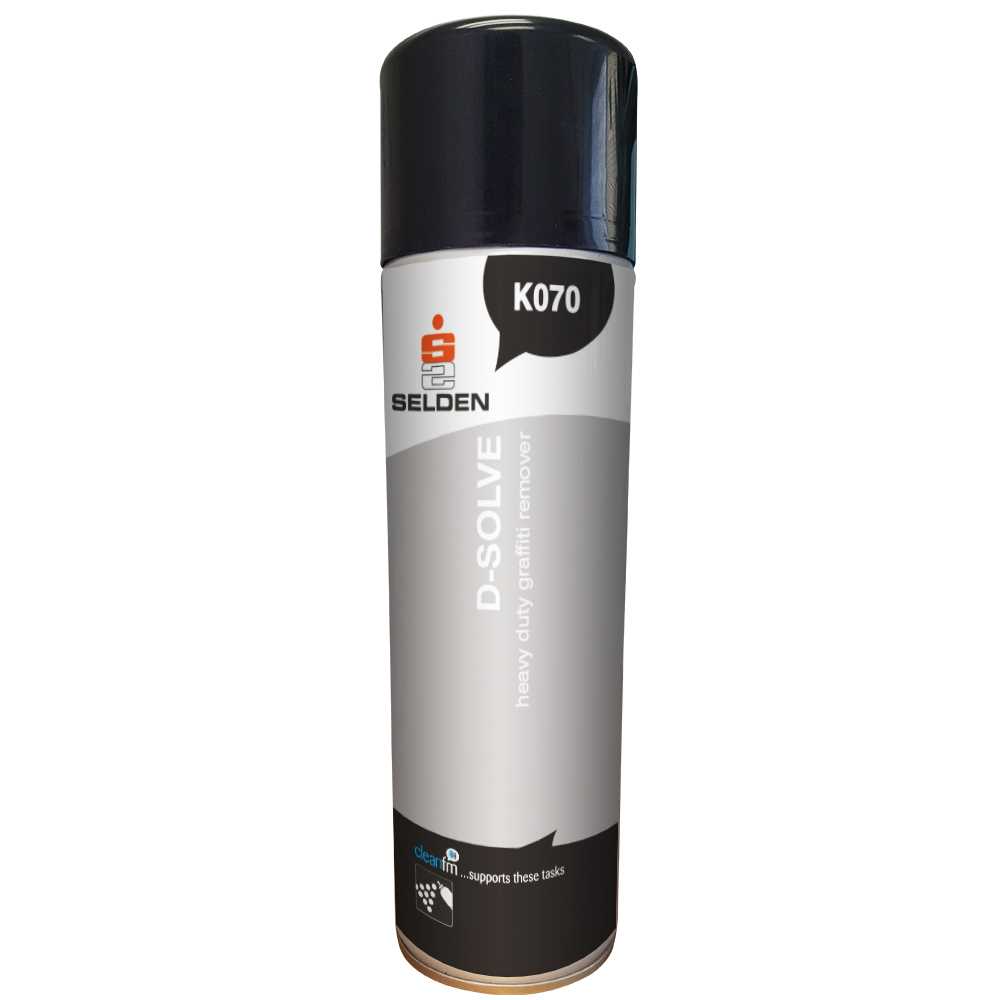
Graffiti Remover Gel – Heavy Duty Aerosol
D-Solve K070 is a specialist treatment for graffiti that ordinary surface cleaning leaves behind. Its solvent gel softens pen, crayon and spray-paint marks so the residue can be lifted from a compatible surface. On unpainted brickwork, the aerosol lets a maintenance cleaner follow the shape of a tag and concentrate on the affected area.
A gel that holds on vertical marks
Gravity can draw a thin remover away from a mark before it has time to work. D-Solve’s thickened formula helps limit that run-off on upright surfaces. The gel can then be rinsed away with water. It sits alongside other specialist cleaning products for caretakers dealing with marks on walls, entrances and service areas.
Key Features & Benefits
- Targeted aerosol application. Direct the gel onto an individual pen mark or a larger patch of spray paint.
- Reduced run-off. The gel stays in closer contact with graffiti on vertical surfaces.
- Works across several mark types. The same product can tackle ink, wax crayon and compatible spray-paint deposits.
- Water-rinsable formula. Loosened material can be wiped or washed away after treatment.
Technical Specifications
| Product |
D-Solve heavy-duty graffiti remover gel |
| Manufacturer and code |
Selden Research Limited · K070 |
| Format |
Aerosol gel, used undiluted |
| Supplied size |
One 480 ml can |
| Typical marks |
Felt-tip and ballpoint ink, crayon and aerosol paint |
| Fragrance |
Citrus |
| Intended user |
Professional cleaning and maintenance teams |
Ideal Applications
- Facilities maintenance. Localised tags on suitable unpainted walls near entrances and service yards.
- Schools and public buildings. Felt-tip pen and crayon marks on solvent-resistant surfaces.
- Contract cleaning. Spot treatment of spray-paint graffiti on compatible masonry between routine cleans.
Directions for Use
- Check a small concealed area for solvent resistance. The product can strip paint or varnish and damage some plastics and fabrics.
- Apply the aerosol directly to the graffiti. Typical working times are 30–60 seconds for pen, 1–3 minutes for crayon and 1–5 minutes for aerosol paint.
- Once the mark softens, wipe, wash or scrape it away using a method suited to the surface. Contain residues and rinse water to protect drains and waterways.
Danger. This aerosol is extremely flammable. Keep the can away from flames, heat and sparks. The pressurised container may burst if heated. Protect it from sunlight and temperatures above 50°C, and never pierce or burn it. K070 may cause an allergic skin reaction. Wear suitable chemical-resistant gloves and eye protection. It is toxic to aquatic life, with long-lasting effects. Refer to the K070 safety data sheet before use.
Frequently Asked Questions
Which types of graffiti does K070 remove?
D-Solve acts on felt-tip and ballpoint ink, crayon and spray paint. Selden lists cellulose, acrylic and polyurethane aerosol paints among the coatings it can soften.
Why choose a gel for graffiti on a wall?
The thickened formula helps reduce run-off. More of the remover stays on the vertical mark while it works, which is useful when treating a small area of wall.
Can I use it on painted doors or plastic panels?
The solvent can soften the paint beneath a mark and can damage some plastics and fabrics. Avoid these surfaces if the finish must be preserved. Always test an inconspicuous area before starting.
How long does the gel need to work?
Selden gives typical times of 30–60 seconds for ballpoint or felt-tip ink, 1–3 minutes for crayon and 1–5 minutes for aerosol paint. Use the instructions on the can for the surface being treated.
Does D-Solve K070 need diluting?
No. The aerosol applies the gel at its supplied strength. Once the mark has softened, wipe, wash or carefully scrape away the residue as appropriate for the surface.
Where can I find the safety data sheet?
The K070 safety data sheet is in Related Documents, alongside Selden’s product information sheet. Both refer to the aerosol gel supplied on this page.