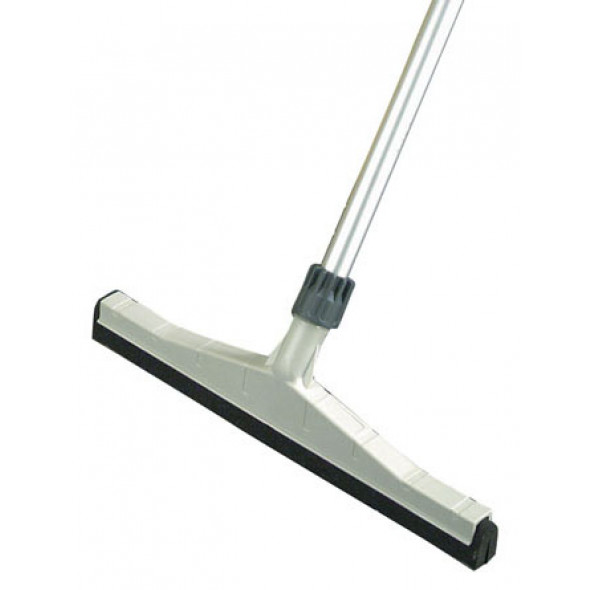
Heavy-Duty Floor Squeegee – Grey, 35–75cm
The Heavy-Duty Floor Squeegee is a grey plastic head for moving water and cleaning solution from suitable hard floors. It provides a practical finishing tool after washing down a floor in a workshop, garage, warehouse or other commercial space.
Two foam rubber blades sit within the plastic head. They help gather liquid for movement towards a suitable collection point; they do not remove the need to inspect the floor and manage any remaining wet areas.
Five widths are listed: 35, 45, 55, 65 and 75cm. Choose a narrower head where equipment restricts access, or a wider option for open floor areas. A compatible 25mm-diameter handle is required and is sold separately.
For a coordinated cleaning system, compare the colour-coded hygiene floor squeegee. Use a suitable deck scrubbing brush for the scrubbing stage before collecting the wash water. Check equipment and cleaning-product suitability for the surface involved.
Key Features & Benefits
- Plastic head: grey construction for routine floor wash-down.
- Two foam rubber blades: help move water and cleaning solution across suitable hard floors.
- Five width options: 35, 45, 55, 65 and 75cm to suit different working areas.
- Handle sold separately: accepts a compatible 25mm-diameter handle; confirm the fitting before ordering.
- Commercial cleaning use: useful after washing suitable floors in garages, workshops, warehouses and leisure facilities.
Directions for Use
1. Choose the width and handle
Select a head width that can reach the intended floor area. Check the connection before fitting a compatible 25mm-diameter handle, then secure it and confirm the head is stable.
2. Prepare the floor
Clear loose debris before washing or squeegeeing. Use a suitable cleaning solution according to its directions, identify an appropriate liquid collection point and keep people clear of the wet work area.
3. Move the liquid
Keep the foam blades in contact with the floor and guide the liquid towards the collection point in controlled passes. Adjust the direction around obstacles and avoid spreading water into dry access routes.
4. Inspect, clean and store
Check for remaining liquid and keep warning signs in place while the floor remains wet. Clean the head after use, inspect the blades for wear or damage and allow it to dry before storage.
Product Specifications
| Specification |
Details |
| Manufacturer |
Robert Scott |
| Product type |
Heavy-duty floor squeegee head |
| Head material |
Plastic |
| Blade construction |
Two foam rubber blades |
| Colour on this listing |
Grey |
| Width options |
35, 45, 55, 65 and 75cm |
| Handle diameter |
25mm; a compatible fitting is required |
| Handle included |
No; sold separately |
| Intended task |
Moving water and cleaning solution from suitable hard floors |
| Astral Hygiene product code |
4916 |
FAQs
Is a handle supplied with the squeegee?
No. This listing is for the squeegee head, with a compatible handle sold separately. The manufacturer specifies a 25mm handle diameter; check the connection as well as the diameter before choosing a handle.
Which width should I choose?
Choose from 35, 45, 55, 65 or 75cm according to the available working space. Narrower heads are easier to position around equipment, while wider heads can cover open areas in fewer passes.
What are the head and blades made from?
The head is plastic and carries two foam rubber blades. Check the blades before use, because damage or wear can affect contact with the floor and the collection of liquid.
Can it be used after washing a commercial floor?
Yes, it is intended for moving water and cleaning solution on suitable hard floors. Check that the surface and cleaning product are appropriate, then direct the liquid to a suitable collection point.
Does squeegeeing mean the floor is safe to reopen immediately?
No. Inspect the floor for remaining moisture after use and continue to manage access while it is wet. Follow the site's cleaning procedure and remove warning signs only when appropriate.
How should the squeegee be maintained?
Clean away dirt and cleaning residue after use, then let the head dry before storage. Inspect the foam blades and handle connection regularly, replacing worn or damaged equipment when it no longer works effectively.