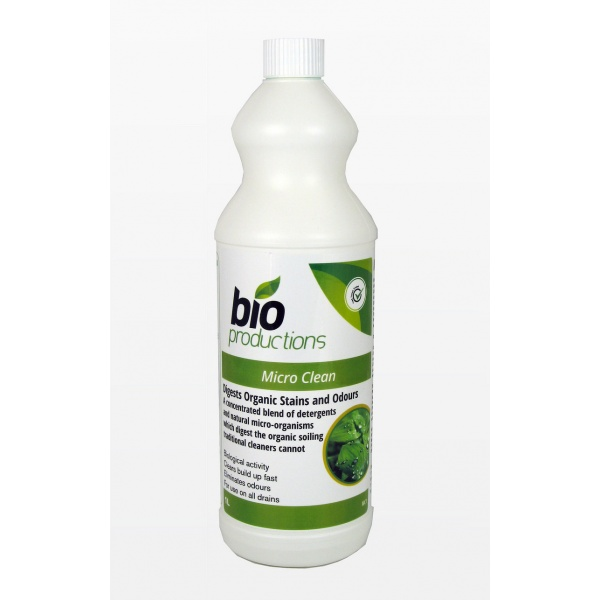
Micro Clean Biological Stain & Odour Cleaner
Micro Clean Biological Stain and Odour Cleaner breaks down organic soiling in carpets, upholstery, fabrics and flooring. Its selected microorganisms produce enzymes that digest the deposits behind persistent stains and smells. The treatment is particularly useful where body fluids or spilled drinks have soaked into the material and ordinary surface cleaning does not reach the source.
Biological digestion of organic soiling
Micro Clean contains selected microorganisms that produce enzymes to break down organic matter. The treatment works on absorbed contamination, helping remove the source of staining and unwanted smells.
Carpets, fabrics and difficult odour sources
The manufacturer lists carpets, upholstery, fabrics and flooring affected by body fluids or spilled beverages. Further applications include urinal areas, walkways and odours associated with sink outlets, baths, showers and kitchen waste units.
Key Features & Benefits
- Biological stain and odour cleaner.
- Microorganisms produce cleaning enzymes.
- Breaks down organic soiling.
- For suitable carpets, upholstery, fabrics and flooring.
- Useful for absorbed body-fluid and beverage contamination.
- Additional drainage and washroom odour applications.
Technical Specifications
| Manufacturer |
Bio-Productions |
| Product |
Micro Clean biological stain and odour digester |
| Listed unit size |
1 litre |
| Manufacturer's 1L order code |
MC1 |
| Product type |
Biological liquid cleaner |
| Listed pH range |
6.5–7.5 |
| General cleaning dilution |
1:1 with tepid water, following the label |
| Prepared solution |
Use within 3–4 hours |
| Application restriction |
Do not spray; allow the treatment to penetrate the soiling |
| Drying instruction |
Do not rinse; allow to dry naturally |
Ideal Applications
- Organic stains in suitable carpets and upholstery.
- Body-fluid and beverage soiling.
- Urinal surrounds and walkways.
- Odour treatment around waste outlets.
Explore carpet and upholstery cleaners and washroom cleaning supplies for your wider cleaning requirements.
Directions for Use
Inspect the material and test colourfastness
Check the material's care instructions and test a small, inconspicuous area of carpet or fabric before proceeding. Identify where the soiling has penetrated and whether the material can tolerate the required treatment. Read the current label and safety sheet, and follow the workplace procedure for handling contaminated areas.
Shake and dilute with tepid water
Shake the container well before opening. The manufacturer specifies a 1:1 dilution with tepid water for general cleaning; use the current label for the appropriate maintenance dilution. Use tepid rather than hot water, and prepare the solution close to the time of use. Diluted product should be used within three to four hours.
Apply enough solution to reach the soiling
Sponge or brush the prepared solution onto the contaminated area; the manufacturer also describes mopping suitable flooring. Ensure that the treatment reaches the affected material, rather than only wetting its surface. Do not spray. The product sheet suggests covering with a damp cloth to help the treatment remain in contact with the soiling.
Allow natural drying and store correctly
Do not rinse the treated area; allow it to dry slowly and naturally as directed. Keep the working area appropriately controlled until dry. Store the remaining concentrate in its sealed original container, out of direct sunlight and away from children, following the label and safety data sheet.
FAQs
How does Micro Clean work?
Its microorganisms produce enzymes that help break down organic soiling.
Which stains and odours can it treat?
Manufacturer-listed examples include body-fluid contamination and spilled beverages absorbed into suitable materials.
Can it be used on carpets and upholstery?
Yes. Carpets, upholstery and fabrics are listed applications where the material is suitable for the treatment.
Is it useful around urinals?
Yes. Bio-Productions identifies urinal areas and urine-contaminated walkways among its applications.
Should it be sprayed onto the surface?
No. The manufacturer specifies a penetrating application and states that the product should not be sprayed.
Does the treatment need rinsing?
The stated method leaves the treatment to dry naturally without rinsing.